
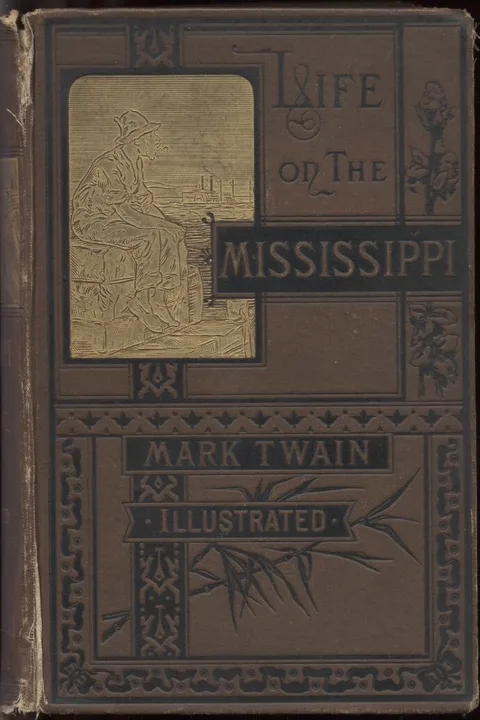
Life on the Mississippi
미시시피강에서의 생활
Mark Twain (1835–1910)
The Story
Tap a word to translate it. Select text to highlight it or add it to your study plan.
When I was a boy on the Mississippi River, there was only one permanent ambition among my comrades: to be a steamboat man.I gained the position of cub pilot, but I soon found that learning the river was a far harder task than I had ever imagined.My teacher, Mr. Bixby, told me I must learn the shape of the river so perfectly that I could call it up in my mind in the dark, from memory alone.
I said that if I ever got the river by heart, I would be able to see it in my sleep, and he replied that yes, and that was exactly the point.So I set to work, and began to note every point, bend, bar, island, snag and hill along twelve hundred miles of river, in both directions.Just when I had a shape nearly learned, awake, Mr. Bixby would ask me the same question at night, in pitch darkness, and I would have nothing to say.
One night I finally admitted that I could see nothing at all in the dark, and he shouted at me that I must learn to ‘read’ the river as if it were a book, printed in a language of its own.I nearly despaired. It seemed to me that to be a pilot, I must learn a hundred things, and unlearn none of them.But little by little, from hundreds of trips up and down, the face of the river did become a wonderful book to me, telling its secrets without reserve.
There was never a page that was void of interest; a broken line on its surface always meant a broken bottom underneath, and a slanting mark meant a bluff reef.Now, whenever I looked at the river, I could not help reading it, the way another man might read a newspaper he had read every day of his life.But there came a day when I began to cry out at a wonderful sunset on the water, and stopped, realizing something had been lost as well as gained.
I had lost something, too. All the grace, the beauty, the poetry, had gone out of that majestic river; I saw it now only as so much floating timber, so many feet of water, so many hidden dangers to be steered around.I still mourn for that first, unconscious delight I felt in the river’s beauty, before I ever ceased to be a passenger and became a pilot who saw only facts.Yet I would not trade the knowledge for the beauty; a doctor, I think, sees a beautiful woman’s blush and thinks only of her illness, and gains something no less valuable than what he has lost.
Full translationTry the story first — open this only to check your understanding.
제가 미시시피강에서 소년이었을 때, 친구들 사이에는 오직 하나의 변치 않는 꿈이 있었어요. 바로 증기선 선원이 되는 것이었지요. 저는 견습 조종사 자리를 얻었지만, 강을 배운다는 것이 제가 상상했던 것보다 훨씬 힘든 일임을 곧 깨달았어요. 제 스승인 빅스비 선생님은 제게 강의 모양을 완벽하게 익혀서, 어둠 속에서도 오직 기억만으로 머릿속에 떠올릴 수 있어야 한다고 말씀하셨어요.
제가 만약 강을 완전히 외운다면 잠결에도 강을 볼 수 있을 거라고 말하자, 선생님은 그렇다고, 바로 그것이 핵심이라고 답하셨어요. 그래서 저는 일에 착수해, 천이백 마일에 이르는 강을 오가며 모든 지점, 굽이, 모래톱, 섬, 유목, 언덕을 양쪽 방향 모두 기록하기 시작했어요. 낮에 배운 강의 모습을 거의 다 익혔다 싶으면, 빅스비 선생님은 캄캄한 밤에 똑같은 질문을 하셨고, 저는 아무 대답도 하지 못했어요.
어느 날 밤 저는 마침내 어둠 속에서는 아무것도 보이지 않는다고 인정했고, 선생님은 강을 마치 그 자체의 언어로 인쇄된 책처럼 '읽을' 줄 알아야 한다고 소리치셨어요. 저는 거의 절망했어요. 조종사가 되려면 백 가지를 배워야 하고, 그중 하나도 잊어서는 안 될 것만 같았거든요. 하지만 수백 번의 왕복을 거치며 조금씩, 강의 모습은 제게 아무것도 숨기지 않고 비밀을 들려주는 놀라운 책이 되어 갔어요.
흥미롭지 않은 페이지는 하나도 없었어요. 수면 위의 끊어진 줄무늬는 언제나 그 아래 얕은 바닥을 뜻했고, 비스듬한 자국은 암초를 뜻했지요. 이제 강을 볼 때마다, 저는 마치 평생 매일 읽어 온 신문을 읽듯이, 강을 읽지 않을 수가 없었어요. 하지만 어느 날, 저는 물 위의 근사한 노을을 보고 감탄하려다 문득 멈춰 섰어요. 얻은 것만큼이나 잃은 것도 있다는 걸 깨달았거든요.
저는 무언가를 잃기도 했던 거예요. 그 웅장한 강이 지녔던 우아함과 아름다움, 시적인 정취가 모두 사라져 버렸어요. 이제 저는 강을 그저 떠다니는 목재, 몇 피트의 물, 피해서 조종해야 할 숨은 위험들로만 보게 되었어요. 저는 승객이기를 그치고 사실만을 보는 조종사가 되기 전, 강의 아름다움에서 느꼈던 그 첫 순수한 기쁨을 지금도 그리워해요. 그래도 저는 그 아름다움과 지식을 바꾸지 않을 거예요. 의사는, 제 생각에, 아름다운 여인의 붉어진 뺨을 보면 오직 그녀의 병만을 떠올리겠지만, 그 또한 잃은 것 못지않게 소중한 무언가를 얻는 셈이니까요.
Original text
Now read the original
You just read an easy retelling. Here is the same passage exactly as the author wrote it — unabridged, split into short readings.
Chapter 9 — Continued Perplexities · 2,434 words · 5 short readings
Read the originalComprehension Check
1. What did Mr. Bixby require the narrator to learn about the river?
2. What changed once the narrator finally mastered reading the river?
3. How does the narrator ultimately feel about this trade-off?
Vocabulary
noun
ambition
야망, 포부
There was only one permanent ambition among my comrades.
친구들 사이에는 오직 하나의 변치 않는 꿈이 있었어요.
Your Summary
In 1–2 sentences, say what Mr. Bixby demanded the narrator learn, and what the narrator realized he had lost once he finally mastered it.
Source: Adapted from Mark Twain's memoir "Life on the Mississippi" (1883; long in the public domain, Project Gutenberg #245), from the chapters recounting his apprenticeship as a steamboat pilot under Horace Bixby. This simplified retelling and its Korean translation are original text written for SeoJae Story.
Read this with your book club
Share this chapter with your book club and discuss it together.