
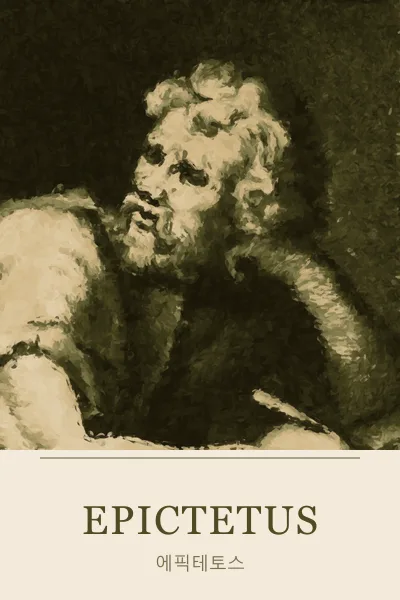
The Enchiridion: Show It by Your Actions
엥케이리디온: 행동으로 보여라
Epictetus (c. 50–135)
The Story
Tap a word to translate it. Select text to highlight it or add it to your study plan.
The last pages of the handbook describe what real progress in philosophy looks like, and it is not clever talk.
“Never call yourself a philosopher, and do not talk much about your principles among ordinary people; show them by your actions.At a dinner, for example, do not lecture people on how they ought to eat, but eat as you ought.Sheep do not bring up their grass to show the shepherd how much they have eaten; they digest it inside and produce wool and milk outside.In the same way, do not show off your principles to others, but show them the actions that come from digesting those principles.
An ordinary person expects help or harm only from outside things; a philosopher expects all help and harm from himself.These are the signs of someone who is making progress: he blames no one, praises no one, complains about no one, and never talks about himself as if he were important or knew a great deal.If he is praised, he smiles quietly at the person who praises him; if he is criticised, he does not defend himself.
How long will you wait before you demand the best of yourself?You are no longer a boy, but a grown man; if you keep putting things off, day after day, you will make no progress without even noticing, and you will live and die an ordinary person.So from this moment, decide to live as an adult who is making progress, and let whatever seems best be a law you never break.When any pain or pleasure, glory or shame comes, remember that the contest is now, the Olympic Games have begun, and they cannot be put off.You are not yet Socrates, but you should live as someone who wants to become Socrates.
We spend all our time learning how to prove that lying is wrong, and yet at the same time we lie.”
Full translationTry the story first — open this only to check your understanding.
안내서의 마지막 장들은 철학에서 진짜 발전이 어떤 모습인지 그려 보여요. 그것은 똑똑한 말이 아니에요.
"결코 스스로를 철학자라 부르지 말고, 평범한 사람들 사이에서 네 원칙을 많이 떠들지 마라. 행동으로 보여라. 예를 들어 저녁 식사 자리에서는 사람들에게 어떻게 먹어야 하는지 훈계하지 말고, 네가 먹어야 할 방식대로 먹어라. 양은 얼마나 먹었는지 목자에게 보여 주려고 풀을 게워 내지 않는다. 속으로 소화하여 겉으로 양털과 젖을 내놓는다. 마찬가지로 남들에게 네 원칙을 뽐내지 말고, 그 원칙을 소화해서 나온 행동을 보여라.
평범한 사람은 도움이든 해든 바깥의 것에서만 오기를 기대한다. 철학자는 모든 도움과 해가 자기 자신에게서 온다고 여긴다. 발전하고 있는 사람의 표시는 이렇다. 누구도 탓하지 않고, 누구도 칭찬하지 않고, 누구에 대해서도 불평하지 않으며, 자기가 대단하거나 많이 아는 사람인 양 자신에 대해 말하지 않는다. 칭찬을 받으면 칭찬하는 이를 보며 조용히 미소 짓고, 비판을 받으면 자신을 변호하지 않는다.
언제까지 미루다가 너 자신에게 최선을 요구하겠는가? 너는 더 이상 소년이 아니라 다 자란 어른이다. 하루하루 계속 미루기만 한다면, 알아차리지도 못한 채 아무 발전도 하지 못하고 평범한 사람으로 살다 죽을 것이다. 그러니 바로 이 순간부터 발전하는 어른으로 살기로 결심하고, 가장 좋아 보이는 것을 결코 어기지 않을 법으로 삼아라. 어떤 고통이나 즐거움, 영광이나 수치가 다가오면, 시합은 지금이고 올림픽 경기는 이미 시작되었으며 미룰 수 없다는 것을 기억하라. 너는 아직 소크라테스가 아니지만, 소크라테스가 되고자 하는 사람으로 살아야 한다.
우리는 거짓말이 왜 나쁜지 증명하는 법을 배우느라 온 시간을 쓰면서, 바로 그 순간에도 거짓말을 한다."
In plain words
에픽테토스에게 철학은 말하는 것이 아니라 하는 것이에요. 풀을 양털로 바꾸는 양처럼, 지혜로운 사람은 뽐낼 필요 없이 생각을 조용하고 좋은 행동으로 바꿔요. 발전은 작은 표시로 드러나요. 누구도 탓하지 않고, 칭찬과 비판 앞에서 침착하고, 자기 자신에게 책임을 지는 거예요. 그리고 시작할 때는 바로 오늘이에요. 모든 어려운 순간이 우리의 올림픽 경기이고, 준비됐다고 느낄 때까지 미룰 수는 없어요.
Original text
Now read the original
You just read an easy retelling. Here is the same passage exactly as the author wrote it — unabridged, split into short readings.
Chapters XLVI–LI · 1,121 words · 2 short readings
Read the originalComprehension Check
1. How should you show your principles, according to Epictetus?
2. What does the sheep comparison teach?
3. Where does a philosopher expect help and harm to come from?
4. What does someone who is making progress do when criticised?
5. Why does Epictetus mention the Olympic Games?
Vocabulary
noun
principle
원칙, 원리
She never lies; it is one of her principles.
그 사람은 절대 거짓말을 하지 않아요. 그게 그 사람의 원칙 가운데 하나예요.
Your Summary
In 1–2 sentences, say what the sheep comparison teaches and why Epictetus says the contest is "now".
Source: Adapted from chapters XLVI, XLVIII, L and LI of Epictetus's "Enchiridion" (c. 125), in Thomas Wentworth Higginson's English translation (long in the public domain, Project Gutenberg #45109). This simplified version, the explainer and the Korean translation are original text written for SeoJae Story.
In this book
About this book →The Enchiridion · 0 of 3 read
That's every part we have so far. More chapters are on the way.
Read this with your book club
Share this chapter with your book club and discuss it together.