
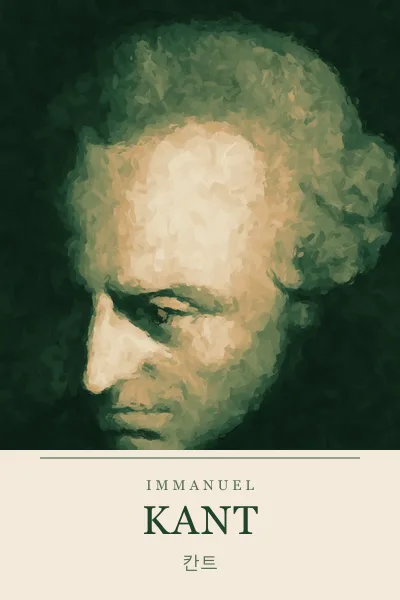
Groundwork of the Metaphysics of Morals: The Categorical Imperative
도덕형이상학 정초: 정언 명령
Immanuel Kant (1724–1804)
The Story
Tap a word to translate it. Select text to highlight it or add it to your study plan.
“Everything in nature works according to laws. Only a rational being has the power to act according to the idea of laws, that is, according to principles; and this power is the will.When reason gives a command to a will that does not always obey it, the command is called an imperative, and it is expressed by the word “ought”.
Now all imperatives command either hypothetically or categorically.A hypothetical imperative says that an action is necessary as a means to something else that one wants: if you want to be healthy, you ought to exercise.A categorical imperative says that an action is necessary in itself, without reference to any other purpose. It does not say “if”; it simply commands.There is therefore only one categorical imperative, namely this: Act only on that maxim by which you can at the same time will that it should become a universal law.
Here is an example. A man finds himself forced by need to borrow money. He knows that he will not be able to pay it back, but he also sees that nothing will be lent to him unless he firmly promises to repay it by a certain time.He wants to make this promise, but he still has enough conscience to ask himself: “Is it not wrong, and against duty, to get out of a difficulty in this way?”Suppose he decides to do it. Then the maxim of his action would be: “When I think I need money, I will borrow it and promise to repay it, although I know that I never can.”
Now I turn this rule of self-love into a universal law, and ask: “How would it be if my maxim were a universal law?”Then I see at once that it could never hold as a universal law of nature, but would necessarily contradict itself.For if everyone in difficulty could promise whatever he liked with no intention of keeping it, promising itself would become impossible. No one would believe anything was promised to him, and everyone would laugh at such statements as empty pretences.”
Full translationTry the story first — open this only to check your understanding.
"자연의 모든 것은 법칙에 따라 움직인다. 오직 이성적 존재만이 법칙에 대한 생각에 따라, 곧 원칙에 따라 행동할 능력을 지니며, 이 능력이 바로 의지다. 언제나 따르지는 않는 의지에게 이성이 내리는 명령을 명령법이라 부르며, 그것은 '~해야 한다'라는 말로 표현된다.
그런데 모든 명령은 가언적으로 명령하거나 정언적으로 명령한다. 가언 명령은 어떤 행동이 자신이 원하는 다른 무언가를 위한 수단으로서 필요하다고 말한다. 건강해지고 싶다면 운동해야 한다는 식이다. 정언 명령은 어떤 행동이 다른 어떤 목적과도 상관없이 그 자체로 필요하다고 말한다. 그것은 '만약'이라고 말하지 않는다. 그저 명령할 뿐이다. 그러므로 정언 명령은 단 하나뿐이며, 그것은 이렇다. 네가 동시에 그것이 보편적 법칙이 되기를 원할 수 있는 준칙에 따라서만 행동하라.
예를 들어 보자. 어떤 사람이 궁해서 어쩔 수 없이 돈을 빌려야 하는 처지가 되었다. 갚을 수 없다는 것을 알지만, 정해진 날까지 꼭 갚겠다고 단단히 약속하지 않으면 아무도 돈을 빌려주지 않으리라는 것도 안다. 이 사람은 그렇게 약속하고 싶지만, 아직 양심이 남아 있어 스스로에게 묻는다. '이런 식으로 곤경에서 벗어나는 것은 옳지 않고 의무에 어긋나는 일이 아닌가?' 그래도 그렇게 하기로 마음먹었다고 하자. 그러면 이 사람이 행동하는 준칙은 이렇게 될 것이다. '돈이 필요하다고 생각될 때는, 결코 갚을 수 없음을 알면서도 돈을 빌리고 갚겠다고 약속하겠다.'
이제 이 자기 사랑의 규칙을 보편적 법칙으로 바꾸어 이렇게 묻는다. '나의 준칙이 보편적 법칙이라면 어떻게 될까?' 그러면 그것이 결코 자연의 보편적 법칙으로 성립할 수 없고, 반드시 스스로 모순에 빠지리라는 것을 곧바로 알게 된다. 곤경에 처한 사람은 누구나 지킬 생각 없이 무엇이든 약속할 수 있다면, 약속이라는 것 자체가 불가능해질 것이기 때문이다. 아무도 자기에게 무언가가 약속되었다고 믿지 않을 것이고, 모두가 그런 말을 공허한 핑계라며 비웃을 것이다."
In plain words
우리가 따르는 규칙 대부분은 '만약' 규칙이에요. 좋은 점수를 원한다면 공부하라는 식이죠. 이런 규칙은 우리가 그 목표를 원하는 동안에만 우리를 묶어요. 칸트는 도덕은 다르다고 주장해요. 도덕은 각자 무엇을 원하든 상관없이 모두에게 명령해요. 그 무조건적인 명령이 정언 명령이에요. 칸트의 시험은 간단해요. 모든 사람이 내 개인적인 규칙대로 행동한다고 상상해 보세요. 그 규칙이 스스로를 무너뜨린다면 도덕적으로 금지된 거예요. 거짓 약속이 시험에 떨어지는 것은 대부분의 사람이 약속을 지킬 때만 통하기 때문이에요. 모두가 거짓말을 한다면 아무도 약속을 믿지 않을 거예요.
Original text
Now read the original
You just read an easy retelling. Here is the same passage exactly as the author wrote it — unabridged, split into short readings.
Second Section · 15,927 words · 35 short readings
Read the originalComprehension Check
1. What is a hypothetical imperative?
2. What makes an imperative categorical?
3. What does the categorical imperative tell us to do?
4. What is the man in the example planning to do?
5. Why can a lying promise not be a universal law?
Vocabulary
noun
imperative
명령, 명령법
Protecting the environment is a moral imperative.
환경을 보호하는 것은 도덕적 의무예요.
Your Summary
In 1–2 sentences, explain the difference between a hypothetical and a categorical imperative, and why a lying promise fails Kant's test.
Source: Adapted from the Second Section of Immanuel Kant's "Groundwork of the Metaphysics of Morals" (1785), in Thomas Kingsmill Abbott's English translation, published as "Fundamental Principles of the Metaphysic of Morals" (long in the public domain, Project Gutenberg #5682). This simplified version, the explainer and the Korean translation are original text written for SeoJae Story.
In this book
About this book →Groundwork of the Metaphysics of Morals · 0 of 3 read
Up next · Part 3 of 3
Humanity as an End
목적으로서의 인간 · 3 min read
Read the next partRead this with your book club
Share this chapter with your book club and discuss it together.