
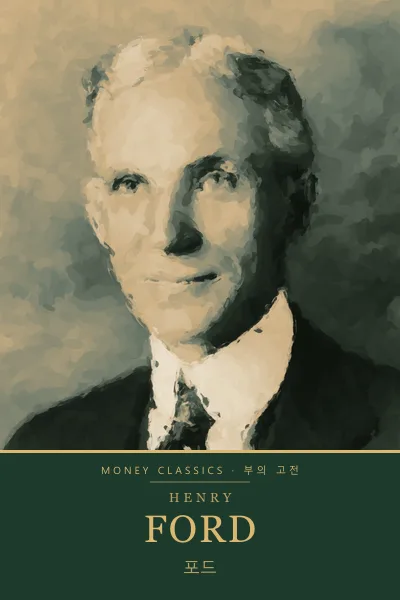
My Life and Work: The Five-Dollar Day
나의 삶과 일: 하루 5달러 임금
Henry Ford (1863–1947)
The Story
Tap a word to translate it. Select text to highlight it or add it to your study plan.
In 1914 Ford shocked American business by roughly doubling his workers’ pay.In this chapter he explains why high wages are good business.
“There is nothing to running a business by custom, saying, ‘I pay the going rate of wages.’Cutting wages means only cutting buying power and shrinking the home market.Most people in the country live on wages, and the rate of their wages decides the prosperity of the country.
It is not usual to speak of an employee as a partner, and yet what else is he?The moment a man calls for help in his business, even if the helper is only a boy, he has taken a partner.The boss is the partner of his worker, and the worker is the partner of his boss; both are necessary.When they pull against each other, they only hurt the business in which they are partners.
In January 1914 we set a minimum wage of five dollars a day and cut the working day from nine hours to eight.It was, in our way of thinking, an act of social justice, and there is a pleasure in feeling that you have made others happy.Before, we had to hire about 53,000 people a year to keep 14,000 workers, because so many left.In 1915, after the change, we had to hire only 6,508, and most of them were needed because the business was growing.”
Full translationTry the story first — open this only to check your understanding.
1914년에 포드는 일꾼들의 임금을 거의 두 배로 올려 미국 재계를 놀라게 했어요. 이 장에서 포드는 높은 임금이 왜 좋은 사업인지 설명해요.
"'나는 시세대로 임금을 준다'고 말하며 관습대로 사업을 하는 데에는 아무 의미가 없습니다. 임금을 깎는 것은 구매력을 깎고 국내 시장을 줄이는 것일 뿐입니다. 이 나라 사람 대부분은 임금으로 살아가며, 그 임금의 수준이 나라의 번영을 결정합니다.
직원을 동업자라고 부르는 것은 흔한 일이 아니지만, 직원이 동업자가 아니고 무엇이겠습니까? 사업에서 도움을 청하는 순간, 그 도우미가 소년 한 명뿐이라 해도, 그 사람은 동업자를 맞이한 것입니다. 사장은 일꾼의 동업자이고, 일꾼은 사장의 동업자입니다. 둘 다 꼭 필요합니다. 서로 반대로 잡아당기면, 자기들이 동업하는 사업을 해칠 뿐입니다.
1914년 1월에 우리는 최저 임금을 하루 5달러로 정하고, 하루 노동 시간을 아홉 시간에서 여덟 시간으로 줄였습니다. 우리 생각으로는 그것이 사회 정의를 실천하는 일이었고, 남을 행복하게 했다고 느끼는 데에는 기쁨이 있습니다. 그전에는 그만두는 사람이 워낙 많아서, 일꾼 1만 4천 명을 유지하려면 한 해에 5만 3천 명쯤을 새로 뽑아야 했습니다. 바꾼 뒤인 1915년에는 6,508명만 뽑으면 되었고, 그나마 대부분은 사업이 커져서 필요했던 사람들이었습니다."
What this means for your money
포드는 임금을 잘 받는 일꾼이 곧 손님이라고 주장했어요. 자기가 만드는 제품을 살 여유가 생기니까요. 일꾼을 '동업자'라고 부른 것은 양쪽 모두 잘될 때에만 사업이 성공한다는 뜻이에요. 높은 임금 덕분에 일꾼들이 그만두지 않아서, 포드는 새 사람을 뽑고 가르치는 막대한 비용을 아꼈어요. 경제학자들은 지금도 '하루 5달러 임금'을 더 많이 주고 더 뛰어나고 충실한 일꾼을 얻은 초기 사례로 이야기해요.
Original text
Now read the original
You just read an easy retelling. Here is the same passage exactly as the author wrote it — unabridged, split into short readings.
Chapter VIII · 5,090 words · 11 short readings
Read the originalComprehension Check
1. What does cutting wages do, according to Ford?
2. Why does Ford call an employee a partner?
3. What happens when bosses and workers pull against each other?
4. What did Ford do in January 1914?
5. How many people did Ford have to hire in 1915, after the wage change?
Vocabulary
noun
wage
임금
The minimum wage went up this year.
올해 최저 임금이 올랐어요.
Your Summary
In 1–2 sentences, explain why Ford called his workers 'partners' and what happened when he raised wages to five dollars a day.
Source: Adapted from chapter VIII of Henry Ford's "My Life and Work" (1922, written with Samuel Crowther), in English and in the public domain (Project Gutenberg #7213). This simplified version, the explainer and the Korean translation are original text written for SeoJae Story.
In this book
About this book →My Life and Work · 0 of 3 read
That's every part we have so far. More chapters are on the way.
Read this with your book club
Share this chapter with your book club and discuss it together.