
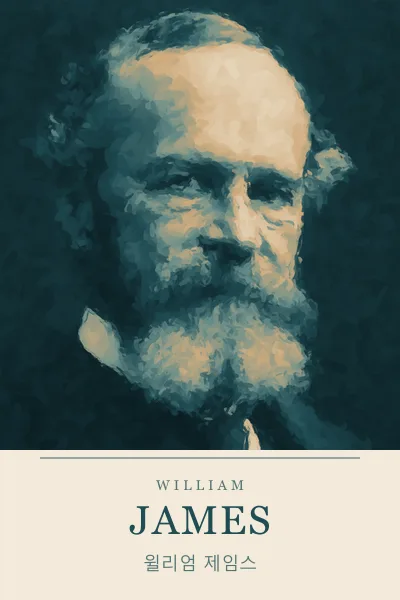
Talks to Teachers on Psychology: Ten Minutes a Day
교사들에게 들려주는 심리학: 하루 십 분
William James (1842–1910)
The Story
Tap a word to translate it. Select text to highlight it or add it to your study plan.
In the second half of his talk on habit, James turns from rules to a warning: what we do not use, we lose.
“Act on every good decision at the very first chance you get; it is not when a decision is made, but when it turns into action, that it changes the brain.No matter how many wise sayings you know, and no matter how good your feelings are, your character will not change for the better unless you take every real chance to act.When a fine feeling is allowed to fade away without doing anything, it is worse than a lost chance: it makes it harder for future feelings to turn into action.
Charles Darwin wrote that until the age of thirty he loved poetry, music and pictures, and took great delight in Shakespeare.But later he could not bear to read a line of poetry, and found Shakespeare so dull that it made him feel sick; his mind had become a machine for finding general laws in large collections of facts.‘If I had my life to live again,’ he wrote, ‘I would have made a rule to read some poetry and listen to some music at least once every week.’
When we are young, we all mean to keep loving poetry, music and great ideas, but in how many middle-aged people does this hope come true?An interest that is not fed every day does not grow into a habit; it dies, choked by the other interests that we do feed.Ten minutes a day of poetry or quiet reading, and an hour or two a week of music, pictures or philosophy, if we begin now and never stop, will surely give us in time all that we wish for.
Finally, keep your power of effort alive by a little unnecessary exercise every day: every day or two, do something for no other reason than that it is difficult.This is like the insurance a man pays on his house: it does him no good at the time, but if the fire comes, it will save him from ruin.The person who has trained himself in this way will stand like a tower when everything around him shakes.”
Full translationTry the story first — open this only to check your understanding.
습관에 관한 강연의 후반부에서 제임스는 규칙에서 경고로 넘어가요. 쓰지 않는 것은 잃는다는 거예요.
"좋은 결심을 할 때마다 가장 먼저 오는 기회에 실행하라. 결심이 뇌를 바꾸는 것은 결심하는 순간이 아니라 그것이 행동으로 바뀌는 순간이다. 지혜로운 말을 아무리 많이 알고 마음이 아무리 착해도, 실제로 행동할 기회를 하나하나 잡지 않으면 성품은 조금도 나아지지 않는다. 좋은 감정이 아무 일도 하지 않은 채 사라지도록 내버려 두면, 그것은 놓친 기회보다 더 나쁘다. 앞으로의 감정이 행동으로 이어지기를 더 어렵게 만들기 때문이다.
찰스 다윈은 서른 살 무렵까지 시와 음악과 그림을 사랑했고 셰익스피어를 무척 즐겨 읽었다고 썼다. 그러나 나중에는 시 한 줄도 읽기 힘들어졌고, 셰익스피어가 너무 지루해 속이 메스꺼울 정도였다. 다윈의 정신은 수많은 사실에서 일반 법칙을 뽑아내는 기계가 되어 버렸던 것이다. 다윈은 이렇게 썼다. '내가 삶을 다시 산다면, 적어도 일주일에 한 번은 시를 조금 읽고 음악을 조금 듣는 것을 규칙으로 삼았을 것이다.'
젊을 때 우리는 모두 시와 음악과 위대한 생각을 계속 사랑하겠다고 마음먹는다. 그러나 중년이 된 사람 가운데 몇이나 그 바람을 이룰까? 날마다 먹이를 주지 않은 관심은 습관으로 자라지 못한다. 우리가 먹이를 주는 다른 관심들에 숨이 막혀 죽어 버린다. 하루 십 분의 시나 조용한 독서, 일주일에 한두 시간의 음악이나 그림이나 철학이면, 지금 시작해서 결코 멈추지만 않는다면 때가 되어 우리가 바라는 모든 것을 틀림없이 얻게 된다.
끝으로, 날마다 굳이 하지 않아도 되는 작은 연습으로 노력하는 힘을 살려 두어라. 하루나 이틀에 한 번은 오직 어렵다는 이유만으로 무언가를 하라. 이것은 집에 드는 보험과 같다. 당장은 아무 도움이 안 되지만, 불이 나면 몰락에서 구해 줄 것이다. 이렇게 스스로를 단련한 사람은 주위의 모든 것이 흔들릴 때에도 탑처럼 서 있을 것이다."
In plain words
제임스의 메시지는 '쓰지 않으면 잃는다'예요. 좋은 뜻도 행동이 되기 전까지는 아무것도 바꾸지 못해요. 천재였던 다윈조차 그저 그 관심에 먹이를 주지 않았다는 이유로 시와 음악에 대한 사랑을 잃었어요. 처방은 작고 꾸준한 거예요. 오늘 시작해 멈추지 않는 하루 십 분이 '언젠가'를 위한 큰 계획보다 더 많은 일을 해요. 일부러 작고 어려운 일을 하나씩 하는 것은 성품을 위한 보험과 같아요. 삶이 정말 힘들어지는 날을 위한 준비예요.
Original text
Now read the original
You just read an easy retelling. Here is the same passage exactly as the author wrote it — unabridged, split into short readings.
Chapter VIII: The Laws of Habit · 3,218 words · 7 short readings
Read the originalComprehension Check
1. When does a decision change the brain, according to James?
2. What happens when a fine feeling fades away without any action?
3. What did Darwin lose later in life?
4. What does James recommend for keeping our interests alive?
5. Why is doing something difficult every day like insurance?
Vocabulary
noun
decision
결정, 결심
Moving to Seoul was a big decision for our family.
서울로 이사한 것은 우리 가족에게 큰 결정이었어요.
Your Summary
In 1–2 sentences, say what Darwin lost and why, and what James means by paying insurance on your character.
Source: Adapted from Chapter VIII, "The Laws of Habit", of William James's "Talks to Teachers on Psychology" (1899) (long in the public domain, Project Gutenberg #16287). This simplified version, the explainer and the Korean translation are original text written for SeoJae Story.
In this book
About this book →Talks to Teachers on Psychology · 0 of 3 read
Up next · Part 3 of 3
Act As If
그런 것처럼 행동하라 · 3 min read
Read the next partRead this with your book club
Share this chapter with your book club and discuss it together.