
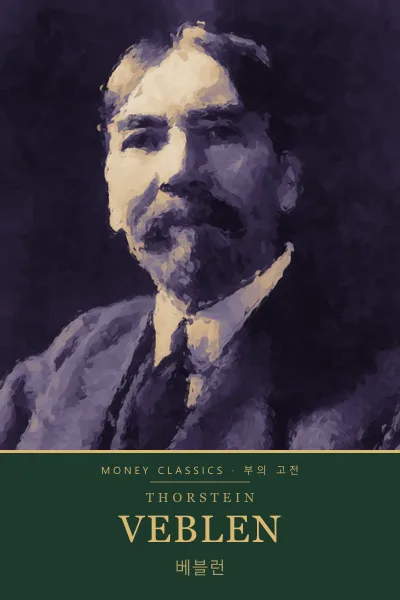
The Theory of the Leisure Class: Why We Are Never Satisfied
유한계급론: 우리는 왜 만족하지 못할까
Thorstein Veblen (1857–1929)
The Story
Tap a word to translate it. Select text to highlight it or add it to your study plan.
Thorstein Veblen was an American economist, the son of Norwegian farmers, who looked at the rich of his day like a scientist studying a strange tribe.In 1899 he published The Theory of the Leisure Class, a book about why people want wealth at all.His answer was not comfort or food, but respect.
“In early times, people won honour by their strength in hunting and war.In settled societies, property took the place of the hunter’s trophies, and owning wealth became the easiest proof of success.It became necessary to own property just to keep one’s good name.Those who fall below the usual standard of wealth lose the respect of their neighbours, and so they lose their own self-respect as well.
Each of us wants to own as much as the people we compare ourselves with, and it is very pleasant to own a little more.But as soon as we get used to a new level of wealth, it no longer satisfies us any more than the old one did.While we are behind, we live in chronic dissatisfaction; once we catch up, we strain to get further ahead.
Since the real goal is to rank higher than everyone else, the desire for wealth can never be fully satisfied.No general increase in a society’s wealth, however fairly it is shared, can end this race.”Veblen called this habit of measuring ourselves against others with money ‘pecuniary emulation’.
Full translationTry the story first — open this only to check your understanding.
소스타인 베블런은 노르웨이 출신 농부의 아들로 태어난 미국의 경제학자로, 당대 부자들을 낯선 부족을 연구하는 과학자처럼 관찰했어요. 1899년 베블런은 사람들이 애초에 왜 부를 원하는지를 다룬 『유한계급론』을 펴냈어요. 베블런의 답은 편안함이나 먹을 것이 아니라 존경이었어요.
"옛날에는 사람들이 사냥과 전쟁에서 보여 준 힘으로 명예를 얻었습니다. 정착한 사회에서는 재산이 사냥꾼의 전리품을 대신했고, 부를 가진 것이 성공을 보여 주는 가장 쉬운 증거가 되었습니다. 좋은 평판을 지키려면 재산을 가져야만 하게 되었습니다. 흔히 기대되는 부의 기준에 못 미치는 사람은 이웃의 존경을 잃고, 그래서 자기 자신에 대한 존중까지 잃게 됩니다.
우리는 저마다 자신과 비교하는 사람들만큼은 가지고 싶어 하고, 조금 더 가지면 아주 기분이 좋습니다. 하지만 새로운 수준의 부에 익숙해지자마자, 그것은 예전보다 더 큰 만족을 주지 못합니다. 뒤처져 있는 동안 우리는 늘 불만 속에 살고, 따라잡고 나면 더 앞서 나가려고 애씁니다.
진짜 목표가 다른 모든 사람보다 높이 서는 것이기 때문에, 부에 대한 욕구는 결코 다 채워질 수 없습니다. 사회 전체의 부가 아무리 늘고 아무리 공정하게 나뉘어도, 이 경주를 끝낼 수는 없습니다." 베블런은 돈으로 남과 견주어 자신을 재는 이 습관을 '금전적 경쟁심'이라고 불렀어요.
What this means for your money
베블런은 누구나 아는 감정을 설명해요. 월급이 오르면 몇 달은 아주 기쁘지만, 곧 그것이 당연해져요. 심리학자들은 이것을 '쾌락의 쳇바퀴'라고 불러요. 계속 달리지만 행복은 늘 같은 자리에 머문다는 뜻이에요. 베블런의 가장 날카로운 지적은 이 경주에서 이길 수 없다는 거예요. 언제나 더 앞선 사람이 있으니까요. 내 돈 관리에 쓸 만한 교훈이 있어요. 이웃이나 SNS가 아니라 과거의 나와 비교하세요.
Original text
Now read the original
You just read an easy retelling. Here is the same passage exactly as the author wrote it — unabridged, split into short readings.
Chapter II, Pecuniary Emulation · 3,282 words · 7 short readings
Read the originalComprehension Check
1. According to Veblen, why do people really want wealth?
2. What took the place of the hunter's trophies in settled societies?
3. What happens when we get used to a new level of wealth?
4. Why can the desire for wealth never be fully satisfied?
5. What did Veblen call measuring ourselves against others with money?
Vocabulary
noun
leisure class
유한계급(일하지 않고 여가를 누리는 부유층)
The leisure class did not need to work for a living.
유한계급은 먹고살려고 일할 필요가 없었어요.
Your Summary
In 1–2 sentences, explain why Veblen thinks the race for wealth can never be won.
Source: Adapted from chapter II, "Pecuniary Emulation", of Thorstein Veblen's "The Theory of the Leisure Class" (1899), written in English and long in the public domain (Project Gutenberg #833). This simplified version, the explainer and the Korean translation are original text written for SeoJae Story.
In this book
About this book →The Theory of the Leisure Class · 0 of 3 read
Up next · Part 2 of 3
Conspicuous Consumption
과시적 소비 · 2 min read
Read the next partRead this with your book club
Share this chapter with your book club and discuss it together.