
Thus Spoke Zarathustra: The Prologue
차라투스트라는 이렇게 말했다: 서문
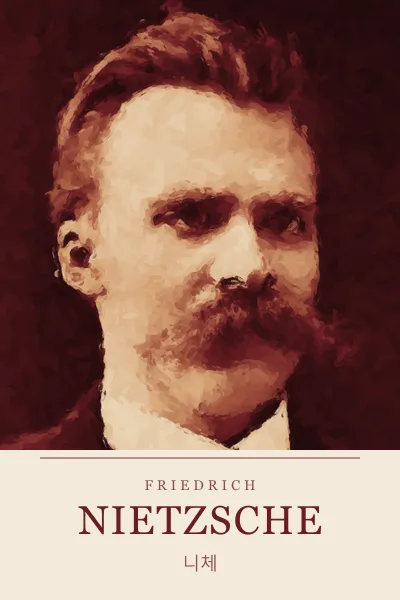
Friedrich Nietzsche (1844–1900)
The Story
Tap a word to translate it. Select text to highlight it or add it to your study plan.
When Zarathustra was thirty years old, he left his home and went into the mountains. There he enjoyed his spirit and his solitude, and for ten years he did not grow tired of it.But at last his heart changed. One morning he rose with the dawn, stood before the sun and said: “Great star! What would your happiness be, if you had no one to shine for?I am tired of my wisdom, like a bee that has gathered too much honey. I need hands held out to take it. So I must go down, as you do in the evening.”
On the way down he met an old holy man living in the forest, who spent his days singing hymns to God.When Zarathustra was alone again, he said to his heart: “Could it be possible! This old saint in the forest has not yet heard that God is dead!”
In the nearest town, a crowd had gathered in the market-place to watch a rope-dancer. Zarathustra spoke to the people:“I teach you the Superman. Man is something that must be overcome. What have you done to overcome him?What is the ape to man? A joke, or a painful embarrassment. And man shall be just the same to the Superman: a joke, or a painful embarrassment.The Superman is the meaning of the earth. I beg you, my brothers, stay true to the earth, and do not believe those who speak to you of hopes beyond this world!Man is a rope stretched between the animal and the Superman: a rope over an abyss.What is great in man is that he is a bridge and not a goal.I tell you: one must still have chaos inside oneself to give birth to a dancing star.”
The people did not understand, so Zarathustra described the most contemptible thing of all, the last man.“‘What is love? What is creation? What is longing? What is a star?’ So asks the last man, and blinks.The earth has then become small, and on it hops the last man, who makes everything small. ‘We have discovered happiness,’ say the last men, and they blink.”But the crowd shouted with joy: “Give us this last man, O Zarathustra! Make us into these last men, and you can keep your Superman!”Zarathustra grew sad and said to his heart: “They do not understand me. I am not the mouth for these ears.”
Full translationTry the story first — open this only to check your understanding.
차라투스트라는 서른 살이 되던 해에 고향을 떠나 산으로 들어갔다. 그곳에서 자신의 정신과 고독을 즐겼고, 십 년 동안 지칠 줄을 몰랐다. 그러나 마침내 마음이 바뀌었다. 어느 날 아침 새벽과 함께 일어나 해 앞에 서서 이렇게 말했다. "위대한 별이여! 비추어 줄 이가 없다면 너의 행복은 무엇이겠는가? 나는 내 지혜에 지쳤다. 꿀을 너무 많이 모은 벌처럼. 그것을 받아 줄 내민 손들이 필요하다. 그러니 나는 내려가야 한다, 네가 저녁마다 그러하듯이."
내려가는 길에 차라투스트라는 숲에 사는 늙은 성자를 만났다. 성자는 하느님께 찬송을 부르며 나날을 보내고 있었다. 다시 혼자가 되자 차라투스트라는 자기 마음에 대고 말했다. "이럴 수가 있나! 숲속의 이 늙은 성자는 신이 죽었다는 소식을 아직 듣지 못했구나!"
가장 가까운 마을의 장터에는 줄타기 광대를 보려고 사람들이 모여 있었다. 차라투스트라가 사람들에게 말했다. "나는 너희에게 초인을 가르친다. 인간은 극복되어야 할 무엇이다. 너희는 인간을 극복하기 위해 무엇을 했는가? 인간에게 원숭이란 무엇인가? 웃음거리, 아니면 고통스러운 수치다. 초인에게 인간도 꼭 그러할 것이다. 웃음거리, 아니면 고통스러운 수치. 초인은 대지의 뜻이다. 형제들이여, 간청하노니 대지에 충실하라. 그리고 이 세상 너머의 희망을 말하는 자들을 믿지 마라! 인간은 짐승과 초인 사이에 매인 밧줄이다. 심연 위에 걸린 밧줄이다. 인간에게서 위대한 점은 인간이 목적이 아니라 다리라는 것이다. 너희에게 말한다. 춤추는 별을 낳으려면 자기 안에 아직 혼돈을 품고 있어야 한다."
사람들이 알아듣지 못하자, 차라투스트라는 가장 경멸스러운 것, 곧 마지막 인간에 대해 이야기했다. "'사랑이 무엇인가? 창조가 무엇인가? 동경이 무엇인가? 별이 무엇인가?' 마지막 인간은 이렇게 묻고 눈을 깜박인다. 그때 대지는 작아지고, 그 위에서 모든 것을 작게 만드는 마지막 인간이 깡충거린다. '우리는 행복을 찾아냈다.' 마지막 인간들은 이렇게 말하고 눈을 깜박인다." 그런데 군중은 기뻐하며 소리쳤다. "오, 차라투스트라여, 그 마지막 인간을 우리에게 다오! 우리를 마지막 인간으로 만들어 다오. 초인은 당신이나 가지시오!" 차라투스트라는 슬퍼져서 자기 마음에 말했다. "저들은 나를 이해하지 못한다. 나는 이 귀들을 위한 입이 아니다."
In plain words
'신은 죽었다'는 니체가 누군가를 죽였다는 말이 아니에요. 근대 유럽에서 신에 대한 믿음이 더 이상 사람들이 실제로 사는 방식을 이끌지 못한다는 뜻이에요. 그 오래된 의미의 원천이 사라졌으니, 니체는 다른 세상의 보상을 기다리지 말고 바로 이 땅에서 스스로 가치를 만들라고 요구해요. 초인(독일어 원어는 '인간을 넘어선 사람'이라는 뜻)은 바로 그렇게 사는 사람의 이상이에요. 인간은 그곳을 향해 가는 다리일 뿐이에요. 마지막 인간은 그 반대예요. 편안함과 안전만 바라고 위대한 것을 향한 노력을 그만둔 사람이에요. 군중의 환호는 니체가 보내는 경고예요.
Original text
Now read the original
You just read an easy retelling. Here is the same passage exactly as the author wrote it — unabridged, split into short readings.
Zarathustra’s Prologue · 4,742 words · 11 short readings
Read the originalComprehension Check
1. Why does Zarathustra decide to leave the mountains?
2. What surprises Zarathustra about the old holy man?
3. What does Zarathustra mean by "Man is a rope stretched between the animal and the Superman"?
4. What is typical of the "last man"?
5. How does the crowd react to the idea of the last man?
Vocabulary
noun
solitude
고독, 혼자 있음
The writer needed a month of solitude to finish the book.
그 작가는 책을 끝내기 위해 한 달 동안 혼자 있어야 했어요.
Your Summary
In 1–2 sentences, say what Zarathustra teaches the people in the market-place, and how they react to his picture of the "last man".
Source: Adapted from Zarathustra's Prologue (sections 1–5) of Friedrich Nietzsche's "Thus Spoke Zarathustra" (1883–1885), in Thomas Common's English translation (long in the public domain, Project Gutenberg #1998). This simplified version, the explainer and the Korean translation are original text written for SeoJae Story.
In this book
About this book →Thus Spoke Zarathustra · 0 of 3 read
Up next · Part 2 of 3
The Three Metamorphoses
세 가지 변화 · 3 min read
Read the next partRead this with your book club
Share this chapter with your book club and discuss it together.