
The Communist Manifesto: Cash Payment
공산당 선언: 현금 거래
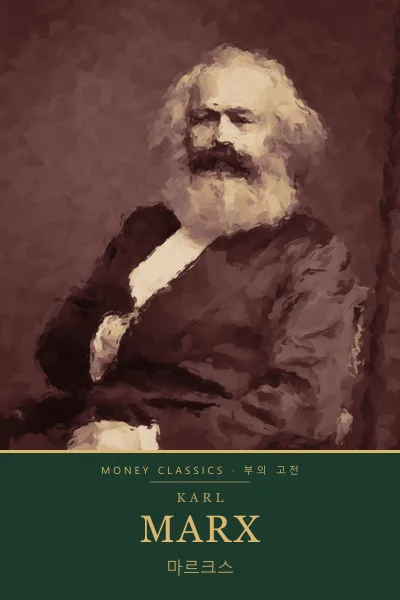
Karl Marx (1818–1883)
The Story
Tap a word to translate it. Select text to highlight it or add it to your study plan.
In 1848, two young Germans, Karl Marx and Friedrich Engels, wrote a short pamphlet for a small workers’ group in London.It became one of the most widely read political texts in history, and it begins with a ghost.
“A spectre is haunting Europe, the spectre of Communism.The history of all society so far is the history of class struggles: free man and slave, lord and serf, master and apprentice, oppressor and oppressed.In our time, society is splitting into two great camps facing each other: the bourgeoisie, who own the factories and the capital, and the proletariat, who own nothing but their labour.
The bourgeoisie has torn apart the old ties that bound people to their ‘natural superiors.’It has left no other link between people than naked self-interest and cold ‘cash payment.’It has turned the doctor, the lawyer, the priest, the poet and the scientist into its paid wage workers, and reduced the family to a mere money relation.
Yet it has also achieved wonders far greater than the Egyptian pyramids, Roman aqueducts and Gothic cathedrals.It cannot exist without constantly changing the tools of production, so everything old is swept away.All that is solid melts into air.”
Even Marx’s fiercest critics admit that this picture of a restless, money-driven world still sounds strangely modern.
Full translationTry the story first — open this only to check your understanding.
1848년, 카를 마르크스와 프리드리히 엥겔스라는 두 젊은 독일인이 런던의 작은 노동자 단체를 위해 짧은 소책자를 썼어요. 이 책은 역사상 가장 널리 읽힌 정치 문서 가운데 하나가 되었는데, 유령 이야기로 시작해요.
"하나의 유령이 유럽을 떠돌고 있습니다. 공산주의라는 유령입니다. 지금까지 모든 사회의 역사는 계급 투쟁의 역사입니다. 자유인과 노예, 영주와 농노, 장인과 도제, 곧 억압하는 자와 억압받는 자가 늘 맞서 왔습니다. 우리 시대에 사회는 서로 마주 선 두 진영으로 갈라지고 있습니다. 공장과 자본을 가진 부르주아지, 그리고 자기 노동 말고는 아무것도 가진 것이 없는 프롤레타리아트입니다.
부르주아지는 사람들을 '타고난 윗사람'에게 묶어 두던 옛 끈을 끊어 버렸습니다. 사람과 사람 사이에 남은 것은 노골적인 이해타산과 냉정한 '현금 거래'뿐입니다. 의사와 법률가, 성직자와 시인과 과학자를 돈 받고 일하는 임금 노동자로 만들었고, 가족 관계마저 단순한 돈 관계로 만들어 버렸습니다.
그러나 부르주아지는 이집트의 피라미드나 로마의 수도교, 고딕 성당보다 훨씬 위대한 기적도 이루었습니다. 생산 도구를 끊임없이 바꾸지 않고는 존재할 수 없기에, 낡은 것은 모두 휩쓸려 갑니다. 단단한 모든 것이 녹아 공기 속으로 사라집니다."
마르크스를 가장 혹독하게 비판하는 사람들조차, 쉼 없이 돈으로 움직이는 이 세상의 모습이 이상할 만큼 지금과 닮았다고 인정해요.
What this means for your money
'부르주아지'는 자본을 가진 사람들, '프롤레타리아트'는 노동을 팔아 사는 사람들을 뜻해요. 요즘 말로 하면 투자자와 직장인쯤이에요. 마르크스는 돈과 시장이 일자리부터 가족까지 손대는 모든 것을 바꿔 놓는다는 사실을 날카롭게 보았어요. 우리 대부분은 둘 다예요. 월급을 받으면서, 연금이나 펀드를 통해 작은 자본도 가지고 있으니까요. 마르크스의 진단은 지금도 연구되지만, 20세기에 그 처방을 시도한 나라들은 소련부터 북한까지 가난과 억압으로 끝났어요.
Original text
Now read the original
You just read an easy retelling. Here is the same passage exactly as the author wrote it — unabridged, split into short readings.
Opening and Section I · 1,209 words · 3 short readings
Read the originalComprehension Check
1. According to the Manifesto, what is the history of all society so far?
2. Who are the proletariat?
3. What link between people did the bourgeoisie leave, according to Marx?
4. What does Marx admire about the bourgeoisie?
5. Why, according to Marx, is everything old swept away?
Vocabulary
noun
spectre
유령
The spectre of war hung over the city.
전쟁의 유령이 도시 위에 드리워져 있었어요.
Your Summary
In 1–2 sentences, explain what Marx says money has done to the ties between people.
Source: Adapted from the opening and section I, "Bourgeois and Proletarians", of Karl Marx and Friedrich Engels's "Manifesto of the Communist Party" (1848), in Samuel Moore's 1888 English translation, edited by Engels (long in the public domain, Project Gutenberg #61). This simplified version, the explainer and the Korean translation are original text written for SeoJae Story.
In this book
About this book →The Communist Manifesto · 0 of 3 read
Up next · Part 2 of 3
Crises and Wages
공황과 임금 · 2 min read
Read the next partRead this with your book club
Share this chapter with your book club and discuss it together.