
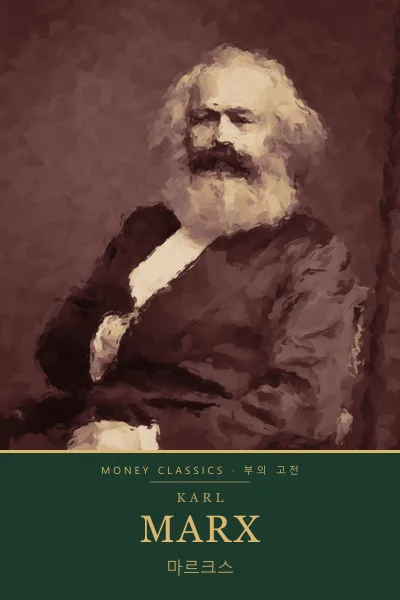
The Communist Manifesto: The Ten Measures
공산당 선언: 열 가지 조치
Karl Marx (1818–1883)
The Story
Tap a word to translate it. Select text to highlight it or add it to your study plan.
In the second half of the Manifesto, Marx and Engels answer their critics and say exactly what they would do.
“You are horrified that we intend to do away with private property.But in your society, private property is already done away with for nine-tenths of the population.You reproach us with intending to do away with your property. Precisely so; that is just what we intend.
It has been objected that if private property ends, all work will stop and universal laziness will overtake us.If that were true, our present society would long ago have collapsed from idleness, for those who work acquire nothing, and those who acquire anything do not work.
In the most advanced countries, the following measures will generally apply.A heavy progressive income tax, and the abolition of all right of inheritance.The centralisation of credit in the hands of the State, by means of a national bank.Free education for all children in public schools, and the abolition of children’s factory labour.
The proletarians have nothing to lose but their chains. They have a world to win.Working men of all countries, unite!”
Full translationTry the story first — open this only to check your understanding.
『공산당 선언』의 뒷부분에서 마르크스와 엥겔스는 비판자들에게 답하고, 자신들이 무엇을 할 것인지 분명히 밝혀요.
"여러분은 우리가 사유 재산을 없애려 한다는 말에 경악합니다. 그러나 여러분의 사회에서 사유 재산은 이미 인구의 10분의 9에게서 사라졌습니다. 여러분은 우리가 여러분의 재산을 없애려 한다고 비난합니다. 바로 그렇습니다. 그것이 정확히 우리가 하려는 일입니다.
사유 재산이 사라지면 모든 일이 멈추고 온 세상이 게을러질 것이라는 반론도 있습니다. 그 말이 사실이라면, 지금 사회는 벌써 오래전에 게으름 때문에 무너졌을 것입니다. 일하는 사람은 아무것도 얻지 못하고, 무언가를 얻는 사람은 일하지 않으니까요.
가장 발전한 나라들에서는 대체로 다음 조치들을 적용할 수 있을 것입니다. 무거운 누진 소득세, 그리고 모든 상속권의 폐지. 국립 은행을 통해 신용을 국가의 손에 모으는 것. 공립 학교에서 모든 아이에게 무상 교육을 하고, 아이들의 공장 노동을 없애는 것.
프롤레타리아가 잃을 것은 쇠사슬뿐이며, 얻을 것은 온 세상입니다. 만국의 노동자여, 단결하라!"
What this means for your money
목록을 다시 보세요. 누진 소득세, 중앙은행, 무상 공교육은 이제 한국을 포함한 거의 모든 나라에서 당연한 제도예요. 이런 제도는 혁명이 아니라 시장 경제 속의 선거와 개혁을 통해 자리 잡았어요. 사유 재산과 상속을 없애는 것 같은 나머지 조치들은 공산주의 국가들이 시도했지만, 물자 부족과 기근, 자유의 상실로 이어졌어요. 오늘날 '부자 증세'나 '상속세 폐지' 이야기를 들을 때, 이 논쟁이 적어도 1848년부터 이어져 왔다는 것을 알아 두면 도움이 돼요.
Original text
Now read the original
You just read an easy retelling. Here is the same passage exactly as the author wrote it — unabridged, split into short readings.
Section II, Proletarians and Communists · 2,147 words · 5 short readings
Read the originalComprehension Check
1. What do Marx and Engels openly say they intend to do?
2. How do they answer the claim that everyone will become lazy?
3. Which tax do they propose?
4. What do they want for all children?
5. According to the Manifesto, what do the proletarians have to lose?
Vocabulary
noun
private property
사유 재산
This beach is private property.
이 해변은 사유지예요.
Your Summary
In 1–2 sentences, name two of Marx's measures that most countries use today and two that failed.
Source: Adapted from section II, "Proletarians and Communists," and section IV of Karl Marx and Friedrich Engels's "Manifesto of the Communist Party" (1848), in Samuel Moore's 1888 English translation, edited by Engels (long in the public domain, Project Gutenberg #61). This simplified version, the explainer and the Korean translation are original text written for SeoJae Story.
In this book
About this book →The Communist Manifesto · 0 of 3 read
That's every part we have so far. More chapters are on the way.
Read this with your book club
Share this chapter with your book club and discuss it together.