
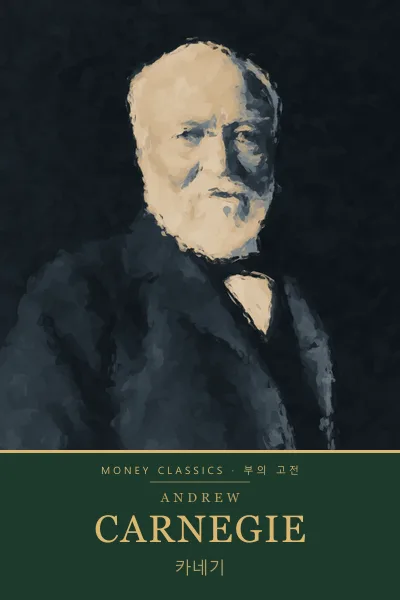
The Gospel of Wealth: Rich and Poor
부의 복음: 부자와 가난한 사람
Andrew Carnegie (1835–1919)
The Story
Tap a word to translate it. Select text to highlight it or add it to your study plan.
Andrew Carnegie was born in Scotland in 1835 and came to America as a poor boy of twelve, when his first job in a cotton mill paid little more than a dollar a week.He went on to build the largest steel company in the world, and in 1901 he sold it and became one of the richest men who had ever lived.In 1889, years before he sold the company, he wrote an essay called “Wealth,” which soon became famous as “The Gospel of Wealth.”
“The problem of our age is how to manage wealth, so that the rich and the poor can still live together as brothers.In the past there was little difference between a chief and his people; when I visited the Sioux, the chief’s tent looked almost exactly like the tents of the poorest men in his tribe.Today the difference between a millionaire’s palace and a worker’s cottage shows how much the world has changed.
In the old days, goods were made by hand in small shops, where the master and his apprentices worked side by side and lived in the same house.The result was rough goods at high prices; today factories make excellent goods so cheaply that the poor enjoy what even the rich could not afford before.What were luxuries have become the necessities of life.
But we pay a price for this change: thousands of workers gather in one factory, and the employer knows little or nothing about them.Rich and poor stop talking to each other, and, as usual, ignorance on both sides breeds distrust on both sides.Competition forces employers to cut costs, including wages, and so there is often friction between capital and labor.
Still, I believe this system has brought more progress than any other that has been tried, and that it naturally puts great wealth into the hands of a few.By wealth I do not mean the modest savings a family needs to live comfortably and educate its children; that is not wealth but a competence, and everyone should aim to have one.The real question is this: once great fortunes are in the hands of a few, what is the right way to use them?”
Full translationTry the story first — open this only to check your understanding.
앤드루 카네기는 1835년 스코틀랜드에서 태어나 열두 살 가난한 소년으로 미국에 왔고, 면직 공장에서 얻은 첫 일자리의 주급은 1달러를 조금 넘는 정도였어요. 카네기는 세계에서 가장 큰 철강 회사를 일구었고, 1901년 그 회사를 팔아 역사상 손꼽히는 부자가 되었어요. 회사를 팔기 몇 년 전인 1889년, 카네기는 '부'라는 에세이를 썼고, 이 글은 곧 '부의 복음'이라는 이름으로 유명해졌어요.
"우리 시대의 문제는 부를 어떻게 다스려야 부자와 가난한 사람이 여전히 형제처럼 함께 살아갈 수 있느냐 하는 것입니다. 예전에는 족장과 그 백성 사이에 별 차이가 없었습니다. 제가 수족 마을을 찾았을 때, 족장의 천막은 부족에서 가장 가난한 사람들의 천막과 거의 똑같아 보였습니다. 오늘날 백만장자의 궁전과 노동자의 오두막 사이의 차이를 보면 세상이 얼마나 변했는지 알 수 있습니다.
옛날에는 물건을 작은 가게에서 손으로 만들었고, 장인과 도제들이 나란히 일하며 한집에서 살았습니다. 그 결과 물건은 조잡하고 값은 비쌌습니다. 오늘날에는 공장이 훌륭한 물건을 아주 싸게 만들어서, 예전에는 부자도 누리지 못한 것을 가난한 사람이 누립니다. 사치품이던 것이 생활필수품이 되었습니다.
하지만 우리는 이 변화의 대가를 치릅니다. 수천 명의 노동자가 한 공장에 모이지만, 고용주는 그 사람들에 대해 거의 아무것도 모릅니다. 부자와 가난한 사람은 서로 말을 나누지 않게 되고, 늘 그렇듯 서로 모르면 서로 믿지 못하게 됩니다. 경쟁 때문에 고용주는 임금을 포함해 비용을 줄일 수밖에 없고, 그래서 자본과 노동 사이에는 자주 마찰이 생깁니다.
그래도 저는 이 체제가 지금까지 시도된 어떤 체제보다 큰 발전을 가져왔으며, 자연히 큰 부를 소수의 손에 쥐여 준다고 믿습니다. 제가 말하는 부는 한 가족이 편안히 살고 자식을 가르치는 데 필요한 적당한 저축이 아닙니다. 그것은 부가 아니라 살림 밑천이며, 누구나 그것을 갖는 것을 목표로 삼아야 합니다. 진짜 질문은 이것입니다. 큰 재산이 소수의 손에 들어온 뒤에는, 그것을 어떻게 쓰는 것이 옳겠습니까?"
What this means for your money
카네기는 '큰 재산'과 '살림 밑천'을 구분해요. 살림 밑천이란 한 가족이 편안히 살고 자녀를 가르칠 만큼의 저축이에요. 카네기는 누구나 살림 밑천을 목표로 삼아야 한다고 말하는데, 이건 결승선이 있는 목표라서 쓸모가 있어요. 내 가족에게 '충분하다'가 무엇인지 스스로 정할 수 있으니까요. 사치품이 필수품이 된다는 말도 여전히 맞아요. 휴대폰 요금제나 배달 앱처럼 한때 없이도 살던 것들이 어느새 매달 나가는 고정비가 되거든요. 나에게 '충분함'이 어떤 모습인지 적어 두고, 해마다 한 번씩 새로운 '필수품'이 그 선을 슬그머니 옮기지 않았는지 확인해 보세요.
Comprehension Check
1. How did Carnegie begin his working life?
2. What did Carnegie notice when he visited the Sioux?
3. According to Carnegie, what good came from factories?
4. What price does society pay for this change?
5. What does Carnegie call the modest savings a family needs to live comfortably?
Vocabulary
noun
wealth
부, 재산
He spent his wealth on schools and hospitals.
그 사람은 자기 재산을 학교와 병원에 썼어요.
Your Summary
In 1–2 sentences, explain what Carnegie thought modern industry had given the poor, and what it had cost society.
Source: Adapted from Andrew Carnegie's essay "Wealth" (North American Review, June 1889), later known as "The Gospel of Wealth"; long in the public domain. This simplified version, the explainer and the Korean translation are original text written for SeoJae Story.
In this book
About this book →The Gospel of Wealth · 0 of 3 read
Up next · Part 2 of 3
Three Ways to Leave a Fortune
재산을 남기는 세 가지 방법 · 3 min read
Read the next partRead this with your book club
Share this chapter with your book club and discuss it together.