
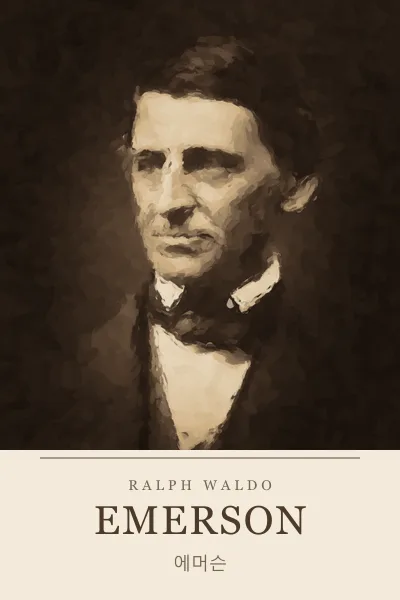
Self-Reliance: Insist on Yourself
자기신뢰: 너 자신을 고집하라
Ralph Waldo Emerson (1803–1882)
The Story
Tap a word to translate it. Select text to highlight it or add it to your study plan.
In the last part of the essay, Emerson looks at the ways people search outside themselves for what they lack: in travel, in copying others and in luck.
“He who travels to be amused, or to get something which he does not carry, travels away from himself.Travelling is a fool’s paradise.At home I dream that in Naples, in Rome, I can be drunk with beauty and lose my sadness.I pack my trunk, hug my friends, sail across the sea and at last wake up in Naples, and there beside me is the hard fact, the sad self, unchanged, that I ran away from.My giant goes with me wherever I go.
We imitate; and what is imitation but the travelling of the mind?Insist on yourself; never imitate.Your own gift you can offer every moment with the power of a whole life’s practice, but another person’s talent you can only half own.Where is the master who could have taught Shakespeare, or Franklin, or Newton? Every great man is unique.Shakespeare will never be made by the study of Shakespeare.
A man who stands alone, without outside support, is strong; just as a man who stands on his feet is stronger than a man who stands on his head.A political victory, a rise in income, the recovery of a sick friend, or some other lucky event raises your spirits, and you think good days are coming.Do not believe it.Nothing can bring you peace but yourself.”
Full translationTry the story first — open this only to check your understanding.
수필의 마지막 부분에서 에머슨은 사람들이 자기에게 없는 것을 바깥에서 찾는 방식들을 살펴요. 여행, 남을 따라 하기, 그리고 행운이에요.
"즐거움을 얻으려고, 또는 자기가 지니지 않은 무언가를 얻으려고 여행하는 사람은 자기 자신에게서 멀어지는 여행을 하는 것이다. 여행은 바보의 낙원이다. 집에서 나는 나폴리에서, 로마에서 아름다움에 취해 슬픔을 잊을 수 있으리라 꿈꾼다. 나는 짐을 꾸리고, 친구들을 안아 주고, 바다를 건너 마침내 나폴리에서 눈을 뜬다. 그런데 내 곁에는 엄연한 사실, 내가 도망쳐 온 슬픈 자아가 조금도 변하지 않은 채 있다. 내 안의 거인은 내가 어디를 가든 나와 함께 간다.
우리는 흉내 낸다. 그런데 모방이란 마음의 여행이 아니고 무엇인가? 너 자신을 고집하라. 결코 흉내 내지 말라. 너 자신의 재능은 평생 갈고닦은 힘으로 언제든 내놓을 수 있지만, 남의 재능은 절반밖에 가질 수 없다. 셰익스피어나 프랭클린이나 뉴턴을 가르칠 수 있었던 스승이 어디 있는가? 위대한 사람은 모두 유일무이하다. 셰익스피어를 공부한다고 셰익스피어가 만들어지지는 않는다.
바깥의 버팀목 없이 홀로 선 사람은 강하다. 발로 선 사람이 머리로 선 사람보다 강한 것과 같다. 선거의 승리, 수입의 증가, 아픈 친구의 회복, 그 밖의 어떤 행운이 기분을 북돋우면, 너는 좋은 날이 오고 있다고 생각한다. 그것을 믿지 말라. 너 자신 말고는 아무것도 너에게 평화를 가져다줄 수 없다."
In plain words
에머슨은 여행 자체에 반대하는 것이 아니에요. 문제에서 도망치려고 떠나는 여행에 반대하죠. 어디를 가든 나 자신도 함께 가니까요. 남의 스타일이나 재능을 베끼는 것도 일종의 여행이에요. 마음이 집을 떠나는 거죠. 내가 가장 잘할 수 있는 것은 나만의 재능이고, 그것은 나만 키울 수 있어요. 오래가는 평화는 행운이나 좋은 소식이 아니라 내 안에서 와요.
Original text
Now read the original
You just read an easy retelling. Here is the same passage exactly as the author wrote it — unabridged, split into short readings.
Self-Reliance (closing) · 2,049 words · 5 short readings
Read the originalComprehension Check
1. What does Emerson say about someone who travels to get something he does not carry?
2. What does Emerson find when he wakes up in Naples?
3. Why does Emerson call imitation 'the travelling of the mind'?
4. 'Shakespeare will never be made by…' How does it end?
5. According to Emerson, what can bring you peace?
Vocabulary
adjective
amused
즐거운, 재미있어하는
The children were amused by the clown.
아이들은 광대를 보고 즐거워했어요.
Your Summary
In 1–2 sentences, say what Emerson thinks is wrong with travelling to escape yourself, and what he means by 'Insist on yourself; never imitate'.
Source: Adapted from the closing section of Ralph Waldo Emerson's essay "Self-Reliance" (1841), written in English and long in the public domain (Project Gutenberg #2944). This simplified version, the explainer and the Korean translation are original text written for SeoJae Story.
In this book
About this book →Self-Reliance · 0 of 3 read
That's every part we have so far. More chapters are on the way.
Read this with your book club
Share this chapter with your book club and discuss it together.