
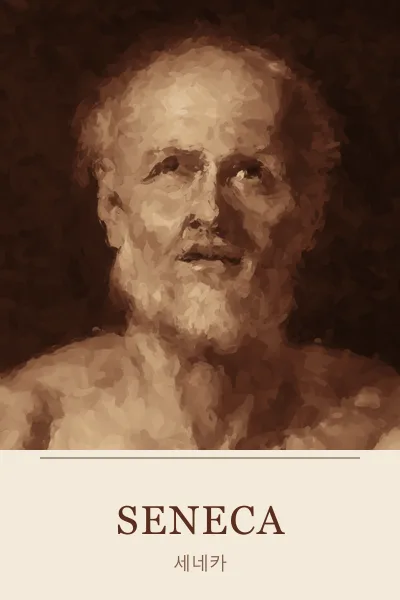
On the Shortness of Life: Live Now
인생의 짧음에 관하여: 지금 살아라
Seneca (c. 4 BC–AD 65)
The Story
Tap a word to translate it. Select text to highlight it or add it to your study plan.
Seneca next turns to the people he calls ‘the busy’, who are always occupied but never really live.
“No one knows less about living than a busy person, and nothing is harder to learn.Other skills can be learned even by boys, but it takes a whole life to learn how to live, and, which may surprise you more, a whole life to learn how to die.So you should not think that a man has lived long because he has wrinkles and grey hair: he has not lived long, he has only existed long.Would you say that a man had travelled far if a storm had caught him as he left the harbour and blown him round and round in the same place? He has not travelled much; he has only been tossed about.
Putting things off is the greatest waste of life: it steals each day as it comes, and takes away the present by promising the future.The greatest obstacle to living is waiting, which loses today while hoping for tomorrow.Everything in the future is uncertain: live now.
Life is divided into three parts: what has been, what is, and what will be.The present is short, the future is uncertain, and the past is certain, because Fortune has no power over it.This is what busy people lose: they have no time to look back on their past, and even if they had, they would not enjoy remembering what they regret.”
Full translationTry the story first — open this only to check your understanding.
세네카는 이어서 '바쁜 사람들'이라 부르는 이들, 늘 무언가에 매여 있지만 정말로 살지는 못하는 사람들에게로 눈을 돌려요.
"바쁜 사람만큼 사는 법을 모르는 사람은 없고, 그것만큼 배우기 어려운 것도 없다. 다른 기술은 소년도 배울 수 있지만, 사는 법을 배우는 데는 평생이 걸린다. 그리고 더 놀랍게도, 죽는 법을 배우는 데도 평생이 걸린다. 그러니 주름과 흰머리가 있다고 해서 그 사람이 오래 살았다고 생각해서는 안 된다. 그 사람은 오래 산 것이 아니라 오래 존재했을 뿐이다. 항구를 떠나자마자 폭풍을 만나 같은 자리를 빙빙 돈 사람을 두고 멀리 항해했다고 하겠는가? 그 사람은 많이 여행한 것이 아니라, 그저 많이 흔들렸을 뿐이다.
미루는 것이야말로 삶의 가장 큰 낭비다. 미루기는 날마다 오는 하루를 빼앗고, 미래를 약속하며 현재를 앗아 간다. 사는 것을 가장 크게 가로막는 것은 기다림이다. 기다림은 내일을 바라다 오늘을 잃는다. 미래의 모든 것은 불확실하다. 지금 살아라.
삶은 세 부분으로 나뉜다. 지나간 것, 지금 있는 것, 앞으로 올 것이다. 현재는 짧고, 미래는 불확실하며, 과거는 확실하다. 과거에는 운명도 손을 쓸 수 없기 때문이다. 바쁜 사람들이 잃는 것이 바로 이것이다. 지난날을 돌아볼 시간이 없고, 시간이 있다 해도 후회스러운 일을 떠올리기를 즐기지 않을 것이다."
In plain words
세네카는 잘 사는 것이 모든 기술 가운데 가장 어렵고, 바쁜 사람은 그것을 연습할 시간이 없다고 말해요. 나이가 많다고 오래 산 것은 아니에요. 이리저리 흔들리기만 하고 어디에도 가지 못한 배처럼, 늙었어도 거의 살아 보지 못했을 수 있어요. 가장 강한 경고는 삶을 미루는 것에 대한 거예요. '은퇴하면 제대로 살아야지'라는 생각은 오지 않을지도 모르는 내일을 위해 오늘을 빼앗아요. 또 과거는 삶에서 영원히 안전한 유일한 부분이니, 잘 살아온 과거는 진짜 보물이라고 덧붙여요.
Original text
Now read the original
You just read an easy retelling. Here is the same passage exactly as the author wrote it — unabridged, split into short readings.
Chapters VII–X · 2,499 words · 5 short readings
Read the originalComprehension Check
1. According to Seneca, how long does it take to learn how to live?
2. What does Seneca say about a man with wrinkles and grey hair?
3. What is 'the greatest waste of life'?
4. Which part of life is certain, according to Seneca?
5. Why don't busy people enjoy looking back on their past?
Vocabulary
noun
wrinkle
주름
My grandfather has deep wrinkles around his eyes.
할아버지는 눈가에 깊은 주름이 있으세요.
Your Summary
In 1–2 sentences, say why Seneca calls putting things off the greatest waste of life, and what he says about the past.
Source: Adapted from chapters VII–X of Seneca's dialogue "On the Shortness of Life" (c. AD 49), in Aubrey Stewart's English translation (long in the public domain, Project Gutenberg #64576). This simplified version, the explainer and the Korean translation are original text written for SeoJae Story.
In this book
About this book →On the Shortness of Life · 0 of 3 read
Up next · Part 3 of 3
Friends from Every Age
모든 시대의 벗 · 2 min read
Read the next partRead this with your book club
Share this chapter with your book club and discuss it together.