
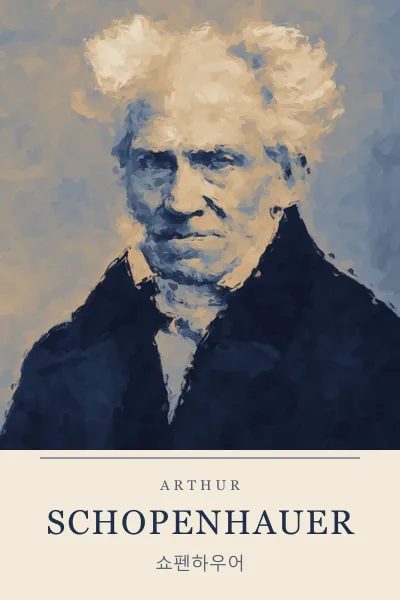
The Wisdom of Life: What a Man Has, and What He Seems
삶의 지혜: 가진 것과 남에게 보이는 것
Arthur Schopenhauer (1788–1860)
The Story
Tap a word to translate it. Select text to highlight it or add it to your study plan.
“Epicurus, that great teacher of happiness, divided human needs into three classes.First come needs that are natural and necessary, such as food and clothing; if they are not met, they cause pain, but they are easy to satisfy.Second come needs that are natural but not necessary, such as the pleasures of the senses. Third come needs that are neither natural nor necessary: the desire for luxury, show and splendour, which never comes to an end.
There is no fixed amount of wealth that will satisfy a man. It always depends on the relation between what he wants and what he gets.A man never misses the things that it never occurs to him to ask for; he is just as happy without them. Another man, who has a hundred times as much, feels miserable because he lacks the one thing he wants.Riches, one may say, are like sea-water: the more you drink, the thirstier you become. And the same is true of fame.
Because of a strange weakness in human nature, people usually think far too much about the opinion others have of them, although a moment’s thought shows that this opinion is not essential to happiness.If you stroke a cat, it will purr; and just as surely, if you praise a man, a sweet look of delight will appear on his face, even if the praise is an obvious lie.And it is astonishing how easily a man is annoyed, and sometimes deeply hurt, by anything that wounds his sense of his own importance.
Most people value what others think above everything else, and care more about it than about what goes on in their own consciousness, which is the one thing truly present to them.They turn the natural order upside down, treating other people’s opinions as the real thing and their own existence as a mere shadow.We would add greatly to our happiness by seeing the simple truth that every man’s real existence is in his own skin, and not in other people’s opinions.Our health, temperament, abilities, income, family, friends and home are a hundred times more important for our happiness than what other people are pleased to think of us.Otherwise a man becomes the slave of what other people think, and how little it takes to upset or to soothe a mind that is greedy for praise!”
Full translationTry the story first — open this only to check your understanding.
"행복을 가르친 위대한 스승 에피쿠로스는 사람의 욕구를 세 가지로 나누었다. 첫째는 음식과 옷처럼 자연스럽고 꼭 필요한 욕구다. 채워지지 않으면 고통을 주지만, 채우기는 쉽다. 둘째는 감각의 즐거움처럼 자연스럽지만 꼭 필요하지는 않은 욕구다. 셋째는 자연스럽지도 필요하지도 않은 욕구, 곧 사치와 과시와 화려함을 바라는 마음으로, 이것은 끝이 없다.
사람을 만족시키는 정해진 재산의 양이란 없다. 그것은 언제나 바라는 것과 얻는 것 사이의 관계에 달려 있다. 사람은 바랄 생각조차 해 본 적 없는 것은 아쉬워하지 않으며, 그것 없이도 똑같이 행복하다. 반면 백 배를 더 가진 다른 사람은 원하는 단 한 가지가 없어서 비참해한다. 재물은 바닷물과 같다고 할 수 있다. 마시면 마실수록 더 목이 마르다. 명성도 마찬가지다.
인간 본성의 묘한 약점 때문에 사람들은 대개 남들이 자기를 어떻게 생각하는지 지나치게 신경 쓴다. 조금만 생각해 봐도 그런 평가가 행복에 꼭 필요한 것이 아님을 알 수 있는데도 말이다. 고양이를 쓰다듬으면 가르랑거린다. 그와 똑같이, 사람을 칭찬하면 그 칭찬이 뻔한 거짓말이라 해도 얼굴에 기쁨의 달콤한 표정이 떠오른다. 그리고 자기가 중요한 사람이라는 느낌에 상처를 입히는 일이라면 무엇이든, 사람이 얼마나 쉽게 짜증을 내고 때로는 깊이 상처받는지 놀라울 정도다.
대부분의 사람은 남들의 생각을 무엇보다 소중히 여기며, 자기 의식 속에서 일어나는 일보다 그것을 더 걱정한다. 정작 자기 의식이야말로 자신에게 진짜로 주어진 단 하나인데도 말이다. 그들은 자연의 순서를 뒤집어서, 남들의 의견을 진짜로 여기고 자신의 존재는 한낱 그림자처럼 여긴다. 모든 사람의 진짜 존재는 남들의 의견 속이 아니라 자기 피부 안에 있다는 단순한 진실을 깨닫는다면, 우리는 훨씬 더 행복해질 것이다. 우리의 건강, 기질, 능력, 수입, 가족, 친구, 집은 남들이 우리를 두고 마음대로 하는 생각보다 행복에 백 배는 더 중요하다. 그렇지 않으면 사람은 남들의 생각의 노예가 된다. 칭찬에 굶주린 마음은 얼마나 작은 일에도 흔들리고 또 달래지는가!"
In plain words
쇼펜하우어는 우리가 가진 것이 기대에 비추어서만 우리를 행복하게 한다고 말해요. 그러니 돈이 많아지면 기대만 함께 높아질 뿐이에요. 그래서 재물은 바닷물과 같아요. 하나를 얻을 때마다 다음 것을 원하게 되고, 그 갈증은 끝나지 않아요. 남들의 의견은 우리 마음이 아니라 그들의 마음속에 있어요. 그러니 아무리 신경 써도 우리가 실제로 겪는 삶의 일부가 될 수는 없어요. 칭찬과 비판에 기분이 좌우되도록 두면 우리 행복을 낯선 사람들에게 넘겨주는 셈이에요. 해결책은 자신의 건강과 인격, 가까운 관계를 먼저 소중히 여기는 거예요.
Original text
Now read the original
You just read an easy retelling. Here is the same passage exactly as the author wrote it — unabridged, split into short readings.
Chapters III–IV · 23,875 words · 53 short readings
Read the originalComprehension Check
1. Which needs, according to Epicurus, never come to an end?
2. Why can a man who has a hundred times as much still feel miserable?
3. What does the comparison with sea-water show?
4. What point does the example of the cat make?
5. Where, according to Schopenhauer, is every man's real existence?
Vocabulary
adjective
necessary
필요한, 필수적인
Water is necessary for all living things.
물은 모든 생명체에게 꼭 필요해요.
Your Summary
In 1–2 sentences, explain why Schopenhauer compares riches to sea-water, and what mistake people make about other people's opinions.
Source: Adapted from Chapters III and IV of Arthur Schopenhauer's "The Wisdom of Life" (from "Parerga and Paralipomena", 1851), in T. Bailey Saunders's English translation (long in the public domain, Project Gutenberg #10741). This simplified version, the explainer and the Korean translation are original text written for SeoJae Story.
In this book
About this book →The Wisdom of Life · 0 of 3 read
Up next · Part 3 of 3
Pain and Boredom
고통과 권태 · 3 min read
Read the next partRead this with your book club
Share this chapter with your book club and discuss it together.