
The Analects: The Joy of Learning
논어: 배움의 기쁨
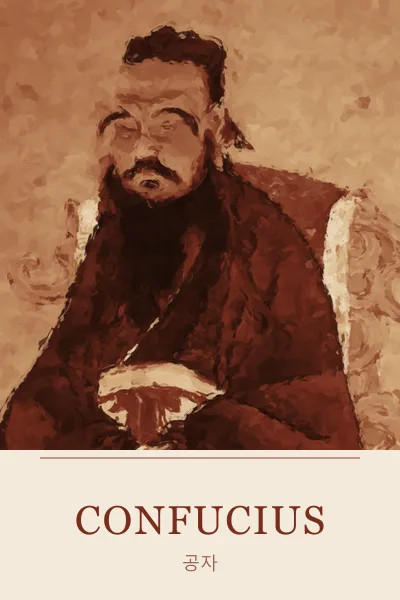
Confucius (551–479 BC)
The Story
Tap a word to translate it. Select text to highlight it or add it to your study plan.
Confucius was a teacher in ancient China who lived about 2,500 years ago.After his death, his students collected his short sayings and conversations in a book called the Analects, which shaped life in Korea, China and Japan for centuries.
The Master said, “Is it not a pleasure to learn, and to practise what you have learned again and again?Is it not a joy to have friends come from far away?And is he not a true gentleman who does not feel hurt when others fail to recognise him?”
The Master said, “At fifteen, I set my heart on learning. At thirty, I stood firm. At forty, I had no doubts.At fifty, I knew the will of Heaven. At sixty, my ear was open to the truth. At seventy, I could follow my heart’s desire without doing wrong.”
The Master said, “If you keep reviewing the old so that you keep learning the new, you can be a teacher of others.”“Learning without thinking is wasted work; thinking without learning is dangerous.”To his student Zilu he said, “Shall I teach you what knowledge is? When you know a thing, say that you know it; when you do not know a thing, admit that you do not know it. This is knowledge.”
“When I walk with two other people, I am sure to find a teacher.I choose their good points and follow them, and I see their bad points and correct them in myself.”“If a man hears the right Way in the morning, he may die in the evening without regret.”
Full translationTry the story first — open this only to check your understanding.
공자는 약 2,500년 전 고대 중국에 살았던 스승이에요. 공자가 세상을 떠난 뒤 제자들은 짧은 말씀과 대화를 『논어』라는 책으로 엮었고, 이 책은 수백 년 동안 한국과 중국과 일본의 삶을 빚었어요.
선생님께서 말씀하셨다. "배우고 때때로 익히면 또한 기쁘지 아니한가? 벗이 먼 곳에서 찾아오면 또한 즐겁지 아니한가? 남이 알아주지 않아도 서운해하지 않으면 또한 군자가 아니겠는가?"
선생님께서 말씀하셨다. "나는 열다섯에 배움에 뜻을 두었고, 서른에 섰으며, 마흔에 흔들리지 않았다. 쉰에 하늘의 뜻을 알았고, 예순에 귀가 순해졌으며, 일흔에는 마음이 하고자 하는 대로 따라도 법도를 넘지 않았다."
선생님께서 말씀하셨다. "옛것을 익혀 새것을 알면 남의 스승이 될 수 있다." "배우기만 하고 생각하지 않으면 헛수고이고, 생각하기만 하고 배우지 않으면 위태롭다." 제자 자로에게는 이렇게 말씀하셨다. "너에게 안다는 것이 무엇인지 가르쳐 주랴? 아는 것을 안다고 하고, 모르는 것을 모른다고 하는 것, 이것이 아는 것이다."
"세 사람이 길을 가면 그 가운데 반드시 내 스승이 있다. 좋은 점은 골라서 따르고, 나쁜 점은 보고 나 자신을 고친다." "아침에 도를 들으면 저녁에 죽어도 좋다."
In plain words
공자에게 배움은 그저 책을 읽는 것이 아니에요. 배운 것을 몸에 밸 때까지 익히는 것이에요. 또 정반대인 두 가지 실수를 경계해요. 생각 없이 외우기만 하는 것과, 공부 없이 생각만 하는 것이에요. 소크라테스처럼, 공자도 참된 앎은 모르는 것에 정직한 데서 시작한다고 말해요. 이 구절 가운데 많은 것이 지금도 한국어의 일상 표현으로 쓰여요. 옛것을 익혀 새것을 안다는 '온고지신', 마흔을 가리키는 '불혹'이 그래요.
Original text
Now read the original
You just read an easy retelling. Here is the same passage exactly as the author wrote it — unabridged, split into short readings.
Books I and II · 2,048 words · 5 short readings
Read the originalComprehension Check
1. What is the Analects?
2. According to the first saying, what makes someone a true gentleman?
3. At what age did Confucius say he 'had no doubts'?
4. What does Confucius say about learning without thinking?
5. Why can Confucius always find a teacher when walking with two others?
Vocabulary
verb
practise
익히다, 연습하다
She practises the piano every evening.
그 아이는 매일 저녁 피아노를 연습해요.
Your Summary
In 1–2 sentences, say what Confucius thinks real learning and real knowledge are.
Source: Adapted from Books I, II, IV and VII of the "Analects" of Confucius (compiled c. 5th–3rd century BC), in James Legge's English translation (long in the public domain, Project Gutenberg #3330). This simplified version, the explainer and the Korean translation are original text written for SeoJae Story.
In this book
About this book →The Analects · 0 of 3 read
Up next · Part 2 of 3
The Gentleman
군자 · 2 min read
Read the next partRead this with your book club
Share this chapter with your book club and discuss it together.