
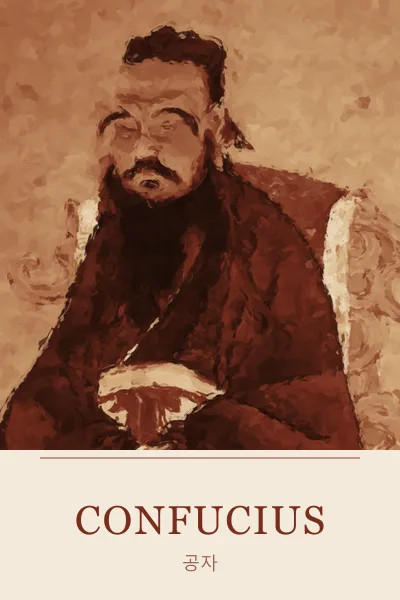
The Analects: The Gentleman
논어: 군자
Confucius (551–479 BC)
The Story
Tap a word to translate it. Select text to highlight it or add it to your study plan.
The most important idea in the Analects is the junzi, usually translated as ‘the gentleman’ or ‘the superior man’: a person of good character, whatever their birth.Confucius often explains the gentleman by comparing him with the ‘small man’, a person who thinks only of himself.
The Master said, “Riches and honours are what people want, but if they cannot be gained in the right way, a gentleman will not keep them.Poverty and a low position are what people dislike, but if they cannot be escaped in the right way, he will not run from them.”“The gentleman thinks about what is right; the small man thinks about what is profitable.”
“When you see a person of worth, think of becoming their equal; when you see a person who is not, look inside and examine yourself.”“The gentleman looks for what he needs in himself; the small man looks for it in others.”“The gentleman lives in harmony with others but does not simply copy them; the small man copies others but does not live in harmony with them.”“The gentleman acts first, and then speaks according to what he has done.”
His student Zigong asked, “Is there one word that can guide a person through their whole life?”The Master said, “Is it not reciprocity? What you do not want done to yourself, do not do to others.”“A gentleman does not leave goodness even for the time it takes to eat a meal; in moments of hurry and in times of danger, he holds on to it.”
Full translationTry the story first — open this only to check your understanding.
『논어』에서 가장 중요한 생각은 군자예요. 영어로는 흔히 'the gentleman'이나 'the superior man'으로 옮기는데, 출신과 상관없이 인품이 훌륭한 사람을 뜻해요. 공자는 흔히 군자를 자기만 생각하는 '소인'과 견주어 설명해요.
선생님께서 말씀하셨다. "부와 귀함은 사람들이 바라는 것이지만, 올바른 방법으로 얻은 것이 아니면 군자는 누리지 않는다. 가난과 천함은 사람들이 싫어하는 것이지만, 올바른 방법으로 벗어날 수 없다면 피하지 않는다." "군자는 의로움에 밝고, 소인은 이익에 밝다."
"어진 사람을 보면 그 사람과 같아지기를 생각하고, 어질지 못한 사람을 보면 속으로 스스로를 돌아보라." "군자는 자신에게서 구하고, 소인은 남에게서 구한다." "군자는 남과 화합하되 똑같아지지 않고, 소인은 똑같아지되 화합하지 못한다." "군자는 먼저 행하고, 그다음에 그 행한 바에 따라 말한다."
제자 자공이 여쭈었다. "평생 지키며 살 만한 한 마디 말이 있습니까?" 선생님께서 말씀하셨다. "그것은 서(恕)일 것이다. 자기가 원하지 않는 것을 남에게 하지 말라." "군자는 밥 한 끼 먹는 동안에도 어짊을 떠나지 않으니, 다급한 때에도 반드시 그렇게 하고, 위태로운 때에도 반드시 그렇게 한다."
In plain words
공자의 군자는 돈이나 집안이 아니라 인품으로 정해져요. 정직함, 공정함, 남을 아끼는 마음이에요. 군자는 '무엇이 옳은가?'를 묻고, 소인은 '나는 무엇을 얻는가?'를 물어요. 삶 전체를 위한 한 마디 규칙은 서(恕)예요. 내가 원하지 않는 일을 남에게 하지 말라는 것이죠. 여러 문화에 있는 '황금률'과 비슷해요. 화합한다는 것은 똑같아진다는 뜻이 아니에요. 군자는 자기 생각을 지키면서도 사람들과 잘 어울릴 수 있어요.
Original text
Now read the original
You just read an easy retelling. Here is the same passage exactly as the author wrote it — unabridged, split into short readings.
Book IV · 933 words · 2 short readings
Read the originalComprehension Check
1. What decides whether someone is a 'gentleman' (junzi)?
2. What does a gentleman do with riches gained in the wrong way?
3. What should you do when you see a person who is not of worth?
4. How is the gentleman different from the small man in a group?
5. What is Confucius's one word that can guide a whole life?
Vocabulary
noun
character
인격, 성품
She is a woman of strong character.
그 사람은 성품이 강한 여성이에요.
Your Summary
In 1–2 sentences, describe how Confucius's gentleman differs from the 'small man', and give his one-word rule for life.
Source: Adapted from Books IV, XIII and XV of the "Analects" of Confucius (compiled c. 5th–3rd century BC), in James Legge's English translation (long in the public domain, Project Gutenberg #3330). This simplified version, the explainer and the Korean translation are original text written for SeoJae Story.
In this book
About this book →The Analects · 0 of 3 read
Up next · Part 3 of 3
Ruling by Virtue
덕으로 다스리기 · 2 min read
Read the next partRead this with your book club
Share this chapter with your book club and discuss it together.