
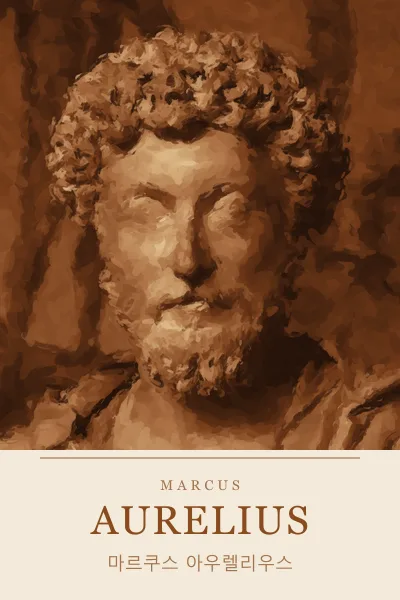
Meditations: The Inner Citadel
명상록: 마음속의 성채
Marcus Aurelius (121–180)
The Story
Tap a word to translate it. Select text to highlight it or add it to your study plan.
“People look for places to escape to: houses in the country, beaches, mountains. You too often long for such things.But this is foolish, because whenever you choose, you can retreat into yourself.Nowhere can a person find more quiet, or more freedom from trouble, than in his own soul, especially if he keeps thoughts there that bring him peace the moment he looks at them.And I say that peace of mind is nothing else than a mind in good order.So give yourself this retreat often, and renew yourself. Keep your principles short and basic, so that as soon as you return to them, they wash your soul clean.
What are you unhappy about? The badness of other people? Remember that rational beings exist for one another, that patience is part of justice, and that people do wrong without meaning to.Does the desire for fame torment you? See how quickly everything is forgotten, how empty applause is, and how small is the corner of the earth where you might be praised.
Among the thoughts you keep ready, let there be these two.The first is that things do not touch the soul. They stay outside it and cannot move it; all our troubles come only from the opinion within.The second is that everything you see is changing at this very moment and will soon be gone. Think how many such changes you have already seen.The universe is change; life is opinion.
Take away your opinion, and the complaint “I have been harmed” is taken away. Take away the complaint “I have been harmed”, and the harm is taken away.Do not act as if you were going to live ten thousand years. Death hangs over you. While you live, while it is in your power, be good.How much trouble a person avoids who does not look to see what his neighbour says or does or thinks, but only at what he does himself, to make sure that it is just and good.Be like the rocky headland against which the waves keep breaking: it stands firm, and the angry water calms down around it.Do not say that you are unlucky because this has happened to you. Say instead that you are lucky, because although this has happened to you, you are still free from pain, not crushed by the present and not afraid of the future.”
Full translationTry the story first — open this only to check your understanding.
"사람들은 떠나 있을 곳을 찾는다. 시골의 집, 바닷가, 산 같은 곳을. 너 역시 그런 곳을 자주 그리워한다. 하지만 그것은 어리석은 일이다. 원하기만 하면 언제든 너 자신 안으로 물러날 수 있기 때문이다. 자기 영혼 속보다 더 고요하고 더 근심 없는 곳은 어디에도 없다. 특히 들여다보는 순간 마음이 평온해지는 생각들을 그 안에 간직하고 있다면 더욱 그렇다. 그리고 나는 마음의 평화란 다름 아닌 잘 정돈된 마음이라고 말한다. 그러니 자주 너 자신에게 이 휴식처를 내어 주고 새로워져라. 원칙은 짧고 기본적인 것으로 지녀라. 그래야 그 원칙으로 돌아가는 즉시 영혼이 깨끗이 씻길 것이다.
무엇이 불만인가? 다른 사람들의 못된 행동인가? 이성을 지닌 존재는 서로를 위해 존재한다는 것, 참는 것도 정의의 일부라는 것, 그리고 사람들은 일부러 잘못을 저지르는 것이 아니라는 것을 기억하라. 명성에 대한 욕심이 너를 괴롭히는가? 모든 것이 얼마나 빨리 잊히는지, 박수갈채가 얼마나 공허한지, 그리고 네가 칭찬받을 수 있는 땅의 구석이 얼마나 작은지 보라.
늘 곁에 준비해 두는 생각들 가운데 이 두 가지가 있게 하라. 첫째, 사물은 영혼에 닿지 않는다. 그것들은 영혼 바깥에 머물며 영혼을 움직일 수 없다. 우리의 모든 괴로움은 오직 안에 있는 생각에서 나온다. 둘째, 네가 보는 모든 것은 바로 지금 이 순간에도 변하고 있으며 곧 사라질 것이다. 이미 얼마나 많은 변화를 보아 왔는지 생각해 보라. 우주는 변화이고, 삶은 생각이다.
네 생각을 버려라. 그러면 '나는 해를 입었다'라는 불평이 사라진다. '나는 해를 입었다'라는 불평을 버려라. 그러면 해 자체가 사라진다. 만 년이라도 살 것처럼 행동하지 마라. 죽음이 네 머리 위에 걸려 있다. 살아 있는 동안, 할 수 있는 동안 선하게 살아라. 이웃이 무슨 말을 하고 무슨 일을 하고 무슨 생각을 하는지 살피지 않고, 오직 자기가 하는 일이 정의롭고 선한지만 살피는 사람은 얼마나 많은 골칫거리를 피하는가. 끊임없이 파도가 부딪쳐 오는 바위 곶처럼 되어라. 곶은 굳건히 서 있고, 성난 물결은 그 주위에서 잠잠해진다. 이런 일이 일어났으니 나는 불행하다고 말하지 마라. 그 대신 이런 일이 일어났어도 나는 행운아라고 말하라. 여전히 괴로움에서 자유롭고, 현재에 짓눌리지도 않으며, 미래를 두려워하지도 않으니까."
In plain words
마르쿠스의 말은, 우리가 휴가지에서 찾는 평온이 이미 우리 마음속에 있다는 뜻이에요. 핵심 주장은 사건 자체에는 좋고 나쁨이 없다는 거예요. 우리를 괴롭히는 것은 '이건 끔찍해'나 '내가 피해를 봤어'처럼 우리가 덧붙이는 판단이에요. 무슨 일이 일어날지는 늘 우리가 정할 수 없지만, 그 판단은 우리가 다스릴 수 있어요. 바로 거기에 우리의 자유가 있어요. 이 생각은 훗날 현대의 인지 치료에도 영감을 주었어요. 인지 치료는 괴로운 감정 뒤에 숨은 생각을 바꾸도록 돕는 치료법이에요.
Original text
Now read the original
You just read an easy retelling. Here is the same passage exactly as the author wrote it — unabridged, split into short readings.
Book IV · 4,473 words · 10 short readings
Read the originalComprehension Check
1. Where does Marcus say we can always retreat?
2. According to Marcus, where do all our troubles come from?
3. What happens, says Marcus, if you take away the complaint "I have been harmed"?
4. Why does Marcus mention living "ten thousand years"?
5. What does the rocky headland stand for?
Vocabulary
noun
retreat
휴식처, 피난처
Their cabin in the woods is a quiet retreat from the city.
숲속의 오두막은 도시를 벗어난 조용한 휴식처예요.
Your Summary
In 1–2 sentences, say where Marcus thinks the best place to retreat is, and what he says really causes our distress.
Source: Adapted from Book IV (sections 3, 7, 17, 18 and 49) of Marcus Aurelius's "Meditations", in George Long's English translation (1862; long in the public domain, Project Gutenberg #15877). This simplified version, the explainer and the Korean translation are original text written for SeoJae Story.
In this book
About this book →Meditations · 0 of 3 read
Up next · Part 3 of 3
The Obstacle Becomes the Way
장애물이 길이 된다 · 3 min read
Read the next partRead this with your book club
Share this chapter with your book club and discuss it together.