
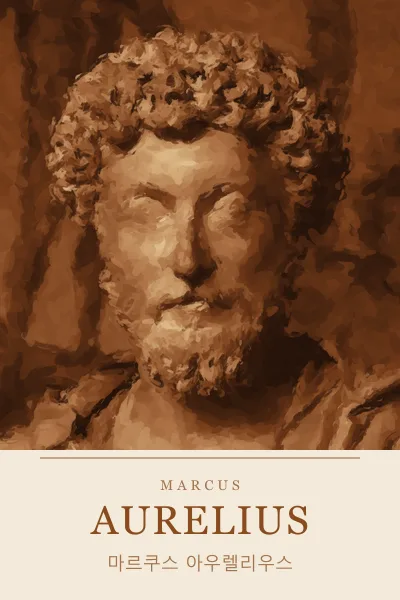
Meditations: What I Owe to Others
명상록: 내가 다른 이들에게 빚진 것
Marcus Aurelius (121–180)
The Story
Tap a word to translate it. Select text to highlight it or add it to your study plan.
Marcus Aurelius ruled the Roman Empire for almost twenty years, and much of that time he spent at war on the cold northern frontier.At night, in his tent, he wrote private notes to himself in Greek. He never meant anyone else to read them, and today we call them the Meditations.He begins not with his own ideas but with a list of debts: what he learned from each person who shaped him.
“From my grandfather Verus I learned good morals and the government of my temper.From the memory of my father, modesty and a manly character.From my mother, kindness, and to keep away not only from evil deeds but even from evil thoughts; and a simple way of living, far from the habits of the rich.From my tutor, to work with my own hands, to want little, not to meddle in other people’s business, and not to listen to gossip.
From Rusticus I first understood that my character needed improvement and discipline.From him I learned not to show off, to write my letters simply, to forgive people quickly once they wished to make peace, and to read a book carefully instead of being satisfied with a quick look.From Apollonius, freedom of will and steadiness of purpose; to look to nothing except reason, not even for a moment; and to stay always the same, in sharp pain, in long illness, and even at the loss of a child.”
Then the second book opens with a reminder that he gave himself for the start of each day:“Begin the morning by saying to yourself: today I shall meet the busybody, the ungrateful, the arrogant, the dishonest, the jealous and the unfriendly.They are like this because they do not know what is good and what is bad.But I have seen that the good is beautiful and the bad is ugly, and I have seen that the person who does wrong is my own kin: not by blood, but because we share the same mind and the same spark of the divine.So none of them can really harm me, because no one can make me ugly against my will; and I cannot be angry with my kinsman, or hate him.For we are made to work together, like feet, like hands, like eyelids, like the rows of the upper and lower teeth. To act against one another is against nature.”
Full translationTry the story first — open this only to check your understanding.
마르쿠스 아우렐리우스는 거의 이십 년 동안 로마 제국을 다스렸고, 그 시간의 많은 부분을 추운 북쪽 국경에서 전쟁을 치르며 보냈어요. 밤이 되면 막사 안에서 그리스어로 자기 자신에게 보내는 글을 남몰래 적었어요. 다른 사람이 읽게 할 생각은 전혀 없었지만, 오늘날 우리는 그 글을 《명상록》이라고 불러요. 이 글은 자기 생각이 아니라 빚의 목록으로 시작해요. 자신을 만들어 준 사람들 한 명 한 명에게서 무엇을 배웠는지를요.
"할아버지 베루스에게서 나는 바른 품행과 화를 다스리는 법을 배웠다. 아버지에 대한 기억에서는 겸손함과 굳센 성품을 배웠다. 어머니에게서는 너그러움을 배웠고, 나쁜 행동뿐 아니라 나쁜 생각까지 멀리하는 법을 배웠다. 그리고 부자들의 습관과는 거리가 먼 소박한 생활도 배웠다. 가정교사에게서는 내 손으로 일하는 법, 적게 바라는 법, 남의 일에 끼어들지 않는 법, 그리고 험담에 귀 기울이지 않는 법을 배웠다.
루스티쿠스 덕분에 나는 처음으로 내 성품에 다듬음과 단련이 필요하다는 것을 깨달았다. 그 가르침 덕분에 나는 잘난 척하지 않는 법, 편지를 꾸밈없이 쓰는 법, 상대가 화해하려 하면 곧바로 용서하는 법, 그리고 책을 대충 훑어보고 만족하지 말고 꼼꼼히 읽는 법을 배웠다. 아폴로니우스에게서는 자유로운 의지와 흔들리지 않는 목표를 배웠다. 단 한순간도 이성 말고는 다른 것을 바라보지 않는 법, 그리고 심한 고통 속에서도, 긴 병 속에서도, 심지어 자식을 잃었을 때에도 늘 한결같은 사람으로 남는 법을 배웠다."
그리고 두 번째 권은 마르쿠스가 하루를 시작할 때마다 스스로에게 해 준 당부로 시작해요. "아침을 시작할 때 스스로에게 이렇게 말하라. 오늘 나는 참견하는 사람, 고마워할 줄 모르는 사람, 오만한 사람, 정직하지 못한 사람, 질투하는 사람, 그리고 쌀쌀맞은 사람을 만나게 될 것이다. 그들이 그렇게 행동하는 것은 무엇이 좋고 무엇이 나쁜지 모르기 때문이다. 하지만 나는 선이 아름답고 악이 추하다는 것을 보았고, 잘못을 저지르는 사람도 나와 한 가족이라는 것을 보았다. 피를 나누어서가 아니라, 우리가 같은 이성과 같은 신성의 불꽃을 나누어 가졌기 때문이다. 그러니 그들 가운데 누구도 나를 정말로 해칠 수는 없다. 내가 원하지 않는 한 아무도 나를 추하게 만들 수 없기 때문이다. 그리고 나는 내 형제에게 화를 내거나 형제를 미워할 수도 없다. 우리는 서로 협력하도록 태어났기 때문이다. 두 발처럼, 두 손처럼, 눈꺼풀처럼, 위아래 이의 줄처럼. 서로를 거슬러 행동하는 것은 자연을 거스르는 일이다."
In plain words
마르쿠스는 고마움을 전하는 것으로 시작해요. 자신이 가진 좋은 습관은 거의 모두 다른 누군가에게서 본받은 것이었어요. 그다음에는 까다로운 사람들을 만나기 전에 미리 마음의 준비를 해요. 그래야 그들의 행동에 허를 찔리지 않으니까요. 핵심은 사람들이 악해서가 아니라 몰라서 잘못을 저지른다는 것, 그리고 스스로 허락하지 않는 한 남의 잘못이 자신의 인격을 망가뜨릴 수 없다는 생각이에요. 모든 사람은 이성을 함께 나누어 가졌으니 한 몸의 부분들처럼 서로에게 속해 있어요. 그러니 서로에게 화를 내는 것은 한 손이 다른 손과 싸우는 것만큼이나 말이 안 되는 일이에요.
Original text
Now read the original
You just read an easy retelling. Here is the same passage exactly as the author wrote it — unabridged, split into short readings.
Book I · 3,556 words · 8 short readings
Read the originalComprehension Check
1. Why did Marcus write the Meditations?
2. What did Marcus learn from Rusticus?
3. According to Marcus, why do people behave badly?
4. Why does Marcus say that no one can really harm him?
5. What does the image of feet, hands and teeth show?
Vocabulary
noun
debt
빚, 신세
I owe a great debt to my first piano teacher.
나는 첫 피아노 선생님께 큰 신세를 졌어요.
Your Summary
In 1–2 sentences, name one thing Marcus learned from another person, and say what he told himself to expect each morning.
Source: Adapted from Book I and the opening of Book II of Marcus Aurelius's "Meditations", written in Greek around 170–180 AD, in George Long's English translation (1862; long in the public domain, Project Gutenberg #15877). This simplified version, the explainer and the Korean translation are original text written for SeoJae Story.
In this book
About this book →Meditations · 0 of 3 read
Up next · Part 2 of 3
The Inner Citadel
마음속의 성채 · 3 min read
Read the next partRead this with your book club
Share this chapter with your book club and discuss it together.