
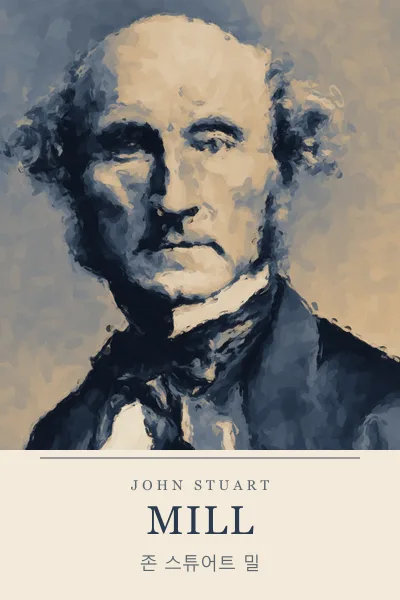
On Liberty: If All Mankind Minus One
자유론: 단 한 사람의 반대 의견
John Stuart Mill (1806–1873)
The Story
Tap a word to translate it. Select text to highlight it or add it to your study plan.
The second chapter of On Liberty is about freedom of thought and speech, and it contains Mill’s most quoted sentence.
“If all mankind minus one were of one opinion, and only one person were of the opposite opinion, mankind would be no more justified in silencing that one person than he, if he had the power, would be justified in silencing mankind.The special evil of silencing an opinion is that it robs the human race, the people who live after us as well as those who live now, and those who disagree with the opinion even more than those who hold it.If the opinion is right, they lose the chance to exchange error for truth.If it is wrong, they lose something almost as valuable: the clearer and livelier picture of truth that comes from its collision with error.
We can never be sure that the opinion we are trying to silence is false.Those who want to silence it deny its truth, but they are not infallible.Many opinions that one age was certain of were thought false by the next, and many that were thought false are now accepted.Even the Church, before it makes someone a saint, listens patiently to a ‘devil’s advocate’ who argues against him.
And even when an opinion is true, it must be fully and freely discussed, or it will be held as a dead dogma, not a living truth.He who knows only his own side of the case knows little of that.His reasons may be good, but if he cannot answer the reasons of the other side, he has no ground for preferring either opinion.”
Full translationTry the story first — open this only to check your understanding.
『자유론』의 두 번째 장은 생각과 말의 자유에 관한 것이며, 밀의 글 가운데 가장 많이 인용되는 문장이 들어 있어요.
"한 사람을 뺀 온 인류가 같은 의견이고 단 한 사람만 반대 의견이라 해도, 인류가 그 한 사람의 입을 막는 것은, 그 사람이 힘이 있다고 해서 인류의 입을 막는 것만큼이나 정당하지 않다. 의견을 침묵시키는 일의 특별한 해악은 그것이 인류를 약탈한다는 것이다. 지금 사는 사람뿐 아니라 뒤에 올 사람들까지, 그리고 그 의견을 가진 사람보다 그 의견에 반대하는 사람을 더욱 약탈한다. 그 의견이 옳다면, 그들은 오류를 진리와 바꿀 기회를 잃는다. 그 의견이 틀렸다면, 그들은 그에 못지않게 귀한 것을 잃는다. 진리가 오류와 부딪칠 때 생기는 더 뚜렷하고 생생한 진리의 모습이다.
우리가 침묵시키려는 의견이 틀렸다고 결코 확신할 수 없다. 그 의견을 막으려는 사람들은 그것이 참이라는 것을 부정하지만, 그들도 틀릴 수 있다. 한 시대가 확신했던 많은 의견이 다음 시대에는 틀렸다고 여겨졌고, 틀렸다고 여겨졌던 많은 의견이 지금은 받아들여진다. 교회조차 누군가를 성인으로 정하기 전에, 그 사람에게 반대 논리를 펴는 '악마의 대변인'의 말을 끈기 있게 듣는다.
그리고 어떤 의견이 참이라 해도, 충분하고 자유롭게 토론되지 않으면 살아 있는 진리가 아니라 죽은 교조로 붙들리게 된다. 자기 쪽 주장만 아는 사람은 그 주장조차 거의 알지 못한다. 그 사람의 근거가 훌륭할 수도 있지만, 상대편의 근거에 답할 수 없다면 어느 의견을 택할 근거도 없는 것이다."
In plain words
밀은 모든 의견이 들리게 해야 하는 이유를 세 가지 들어요. 첫째, 막힌 의견이 참일 수도 있고, 틀린 쪽이 우리일 수도 있어요. 둘째, 틀린 의견도 쓸모가 있어요. 그것에 맞서 논쟁하면서 진리를 더 잘 이해하게 되니까요. 셋째, 반대편 이야기를 전혀 듣지 않으면, 우리 믿음은 스스로 설명조차 못 하는 빈 습관이 돼요.
Original text
Now read the original
You just read an easy retelling. Here is the same passage exactly as the author wrote it — unabridged, split into short readings.
Chapter II · 16,673 words · 37 short readings
Read the originalComprehension Check
1. 'If all mankind minus one were of one opinion…' What does Mill conclude?
2. If a silenced opinion is wrong, what do people still lose?
3. Why does Mill mention the 'devil's advocate'?
4. What happens to a true opinion that is never discussed?
5. What does Mill say about someone who knows only his own side of the case?
Vocabulary
noun
opinion
의견
Everyone has a different opinion about the film.
그 영화에 대해 모두 의견이 달라요.
Your Summary
In 1–2 sentences, give Mill's reasons why we should never silence an opinion, even one we think is false.
Source: Adapted from chapter II of John Stuart Mill's "On Liberty" (1859), written in English and long in the public domain (Project Gutenberg #34901). This simplified version, the explainer and the Korean translation are original text written for SeoJae Story.
In this book
About this book →On Liberty · 0 of 3 read
Up next · Part 3 of 3
A Tree, Not a Machine
기계가 아니라 나무 · 2 min read
Read the next partRead this with your book club
Share this chapter with your book club and discuss it together.