
Understanding Human Nature: Birth Order
인간 이해: 출생 순서
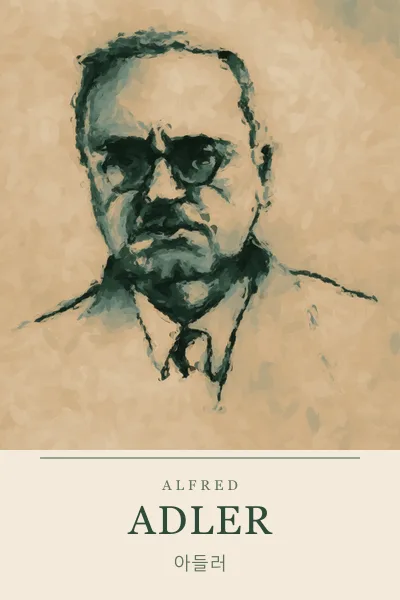
Alfred Adler (1870–1937)
The Story
Tap a word to translate it. Select text to highlight it or add it to your study plan.
Adler was the second of seven children, and all his life he felt that he was competing with his clever older brother, Sigmund.So it is not surprising that he was one of the first psychologists to ask how a child’s place in the family shapes its character.
“Before we can judge a person, we must know the situation in which they grew up, and an important part of it is their position among their brothers and sisters.The youngest child is usually the smallest and the most in need of help, so it grows up in a warmer atmosphere than the others.But no child likes to be the smallest all the time, so the youngest often wants to prove that it can do everything, and to overtake everyone.Some youngest children become the most capable members of the family; others lose courage and become experts at making excuses.
The oldest child is often given responsibility early, as if the family were saying: ‘You are bigger, stronger and older, so you must also be cleverer.’Oldest children often respect power and rules, and they tend to be conservative.The second child always has someone ahead, so it lives like a runner in a race, trying hard to catch up and overtake.The only child is the centre of attention and has every difficulty removed from its path, so it may learn to depend on others and to fear the world.
“It does not matter whether a child really is inferior or not; what matters is how it interprets its situation.And it makes very little difference whether one is first or not: history and experience show that happiness does not lie in being the first or the best.Let us be modest in judging others, and never make moral judgements about a person’s worth.”
Full translationTry the story first — open this only to check your understanding.
아들러는 일곱 남매 가운데 둘째였고, 평생 영리한 형 지그문트와 경쟁한다고 느꼈어요. 그러니 가족 안에서 아이의 자리가 성격을 어떻게 빚는지 처음으로 물은 심리학자 가운데 한 명이 아들러였다는 것은 놀랍지 않아요.
"한 사람을 판단하려면 먼저 그 사람이 자란 상황을 알아야 하고, 그 가운데 중요한 것이 형제자매 사이에서의 자리다. 막내는 대개 가장 작고 가장 도움이 필요해서, 다른 아이들보다 더 따뜻한 분위기에서 자란다. 그러나 어떤 아이도 언제나 가장 작은 아이이기를 좋아하지 않으므로, 막내는 흔히 무엇이든 할 수 있음을 증명하고 모두를 앞지르고 싶어 한다. 어떤 막내는 가족 가운데 가장 유능한 사람이 되고, 어떤 막내는 용기를 잃고 핑계 대기의 달인이 된다.
맏이는 흔히 일찍부터 책임을 맡는다. 마치 가족이 '너는 더 크고, 더 강하고, 나이도 많으니 더 영리해야 한다'라고 말하는 것처럼. 맏이는 흔히 힘과 규칙을 존중하며, 보수적인 경향이 있다. 둘째는 언제나 앞에 누군가가 있으므로, 따라잡고 앞지르려고 애쓰는 경주 선수처럼 산다. 외동은 관심의 중심이고 앞길의 모든 어려움이 치워지므로, 남에게 의지하고 세상을 두려워하는 법을 배우게 될 수 있다.
"아이가 정말로 열등한지 아닌지는 중요하지 않다. 중요한 것은 아이가 자기 처지를 어떻게 해석하느냐다. 그리고 일등이냐 아니냐는 거의 차이가 없다. 역사와 경험이 보여 주듯, 행복은 일등이나 최고가 되는 데 있지 않다. 남을 판단할 때는 겸손하고, 결코 사람의 가치에 대해 도덕적 판단을 내리지 말자."
In plain words
아들러는 같은 가족 안에서도 형제자매가 서로 다른 상황에서 자란다는 점에 주목했어요. 맏이는 흔히 책임감 있는 규칙 수호자가 되고, 둘째는 경쟁자가 되며, 막내는 큰 성취를 이루거나 핑계쟁이가 될 수 있고, 외동은 남에게 기댈 수 있어요. 이것은 정해진 규칙이 아니라 경향이에요. 핵심은 아이가 자기 자리를 어떻게 해석하느냐예요. 현대 연구에 따르면 출생 순서의 영향은 아들러가 생각한 것보다 훨씬 약하지만, 가족이 성격을 빚는다는 생각은 지금도 큰 영향력을 지녀요.
Comprehension Check
1. What was Adler's own place in his family?
2. What are the two ways a youngest child can turn out?
3. How does Adler describe the oldest child?
4. Why does the second child live 'like a runner in a race'?
5. According to Adler, what matters most?
Vocabulary
verb
compete
경쟁하다
Five teams will compete for the prize.
다섯 팀이 상을 두고 경쟁할 거예요.
Your Summary
In 1–2 sentences, describe how Adler thinks the oldest, second, youngest and only child tend to grow up.
Source: Adapted from Book I, chapter VIII ("The Family Constellation") of Alfred Adler's "Understanding Human Nature" (1927), in Walter Béran Wolfe's English translation (public domain). This simplified version, the explainer and the Korean translation are original text written for SeoJae Story.
In this book
About this book →Understanding Human Nature · 0 of 3 read
Up next · Part 3 of 3
Community Feeling
공동체 감각 · 2 min read
Read the next partRead this with your book club
Share this chapter with your book club and discuss it together.