
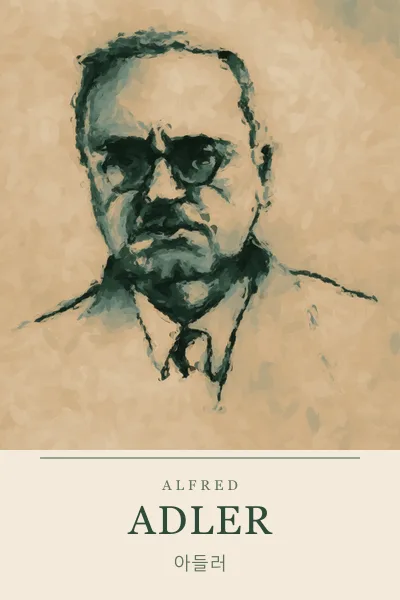
Understanding Human Nature: The Feeling of Inferiority
인간 이해: 열등감
Alfred Adler (1870–1937)
The Story
Tap a word to translate it. Select text to highlight it or add it to your study plan.
Alfred Adler grew up in Vienna as a sickly child; he could not walk properly until he was four, and he almost died of pneumonia.He became a doctor, worked with Sigmund Freud for nine years, and then broke away to found his own school, Individual Psychology.
“Every child begins life in a position of weakness.Growing up among adults, a child feels small, weak and unable to live alone, and sooner or later it becomes aware that it cannot meet life’s challenges by itself.This feeling of inferiority is the driving force, the starting point from which every child’s striving begins.It decides how the child will look for peace and security, and it sets the very goal of the child’s life.
Many mistakes in raising children begin here: we demand more than a child can do, and so we throw its helplessness in its face.Some children are treated as toys, others as valuable property, and others as useless baggage.Laughing at children is almost a crime, for an adult who was always laughed at as a child can never quite escape the fear of looking ridiculous.
To make up for this feeling of inferiority, every person strives for recognition and for superiority.We set ourselves a goal, a fixed point that does not really exist, like the lines of longitude on a map, and we use it to find our way in the confusion of life.This goal gives meaning to our feelings, shapes our imagination, and even decides what we remember and what we forget.We cannot judge any person without comparing their goal of power over others with the strength of their feeling for their fellow human beings.”
Full translationTry the story first — open this only to check your understanding.
알프레드 아들러는 빈에서 병약한 아이로 자랐어요. 네 살이 되어서야 제대로 걸을 수 있었고, 폐렴으로 죽을 뻔하기도 했어요. 아들러는 의사가 되었고, 9년 동안 지그문트 프로이트와 함께 일한 뒤 결별하여 자신만의 학파인 개인심리학을 세웠어요.
"모든 아이는 약한 처지에서 삶을 시작한다. 어른들 사이에서 자라는 아이는 자신이 작고 약하며 혼자서는 살 수 없다고 느끼고, 조만간 삶의 도전을 혼자 감당할 수 없다는 것을 깨닫는다. 이 열등감이 바로 원동력이며, 아이의 모든 노력이 시작되는 출발점이다. 열등감은 아이가 평화와 안정을 어떻게 찾을지를 정하고, 아이 삶의 목표 자체를 정한다.
아이를 기르며 저지르는 많은 실수가 여기서 시작된다. 우리는 아이가 할 수 있는 것보다 많은 것을 요구하고, 그리하여 아이의 무력함을 아이 앞에 들이민다. 어떤 아이는 장난감처럼, 어떤 아이는 값비싼 재산처럼, 또 어떤 아이는 쓸모없는 짐처럼 취급된다. 아이를 비웃는 것은 거의 범죄나 다름없다. 어릴 때 늘 비웃음을 당한 어른은 우스워 보일지 모른다는 두려움에서 끝내 벗어나지 못하기 때문이다.
이 열등감을 메우기 위해 모든 사람은 인정과 우월을 향해 애쓴다. 우리는 스스로 목표를 세운다. 지도 위의 경선처럼 실제로는 존재하지 않는 고정된 점이지만, 우리는 그것으로 삶의 혼란 속에서 길을 찾는다. 이 목표는 우리 감정에 의미를 주고, 상상력을 빚으며, 우리가 무엇을 기억하고 무엇을 잊을지까지 정한다. 어떤 사람이든, 남을 지배하려는 목표와 이웃을 향한 공동체 감각의 크기를 견주어 보지 않고서는 판단할 수 없다."
In plain words
아들러의 핵심 생각은 누구나 작고 약하다는 느낌으로 삶을 시작한다는 거예요. 모든 아이는 실제로 주변 어른들보다 약하니까요. 이 열등감은 병이 아니에요. 정상적인 것이고, 우리를 성장하고 배우고 나아지게 밀어 줘요. 문제는 그 느낌이 너무 강해지거나, 다른 사람과 함께하는 대신 남을 지배해서 그 느낌을 벗어나려 할 때 시작돼요. 아들러의 생각은 베스트셀러 『미움받을 용기』를 통해 한국에서 다시 널리 알려졌어요.
Comprehension Check
1. Who did Adler work with before founding his own school?
2. Why does every child feel inferior, according to Adler?
3. What role does the feeling of inferiority play?
4. Why does Adler say laughing at children is almost a crime?
5. What does Adler compare our life goal to?
Vocabulary
adjective
sickly
병약한
He was a sickly child but grew into a strong man.
그 사람은 병약한 아이였지만 튼튼한 어른으로 자랐어요.
Your Summary
In 1–2 sentences, say where Adler thinks the feeling of inferiority comes from, and what it pushes people to do.
Source: Adapted from Book I, chapter V of Alfred Adler's "Understanding Human Nature" (1927), in Walter Béran Wolfe's English translation (public domain). This simplified version, the explainer and the Korean translation are original text written for SeoJae Story.
In this book
About this book →Understanding Human Nature · 0 of 3 read
Up next · Part 2 of 3
Birth Order
출생 순서 · 3 min read
Read the next partRead this with your book club
Share this chapter with your book club and discuss it together.