Easy English classics for every learner

The great books, in English you can actually read.

Famous stories retold at your level, with the Korean meaning of every word one tap away. No account needed.

Starts at beginner (A1) · No sign-up · Works offline

Try the tools you'll learn with

Tap any word for its meaning and real example sentences from other stories, reveal a whole line, and flip through flashcards — right here.

The Gift of the Magi Listen

It was the day before and Della had only one and eighty-seven

She wanted to buy a present for her husband, Jim, but it was not nearly enough.

dollar

Each girl had one dollar, and each had planned to spend it on herself.

네 자매에게는 각자 1달러가 있었고, 저마다 그 돈을 자기 자신을 위해 쓸 생각이었어요.

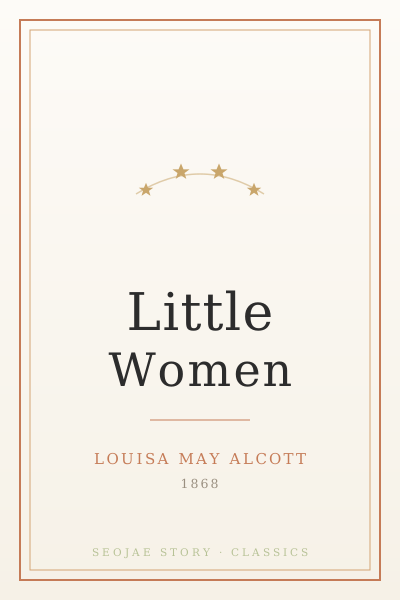
From Little Women

She put on her old brown coat, went out, and sold her long hair for twenty dollars.

델라는 낡은 갈색 외투를 걸치고 나가서, 긴 머리카락을 팔고 20달러를 받았어요.

From The Gift of the Magi

A screen from the reader: tap a word for its meaning, or reveal the whole line's translation.
Vocabulary1 / 5

noun

treasure

보물, 소중한 것

Each of them owned one treasure.

두 사람에게는 각자 보물이 하나씩 있었어요.

Tap the card to flip it
An interactive vocabulary flashcard: flip it, and step through the words in the lesson.

What our readers say

  • Engaging, never stressfulAlex R.Early reader
    I've been using this app for 20 days now and I'm impressed. Even with just a short amount of time every day I learn a lot. … You see grammar in the context of a story, so it actually makes sense when you read it.
  • Tap any word for its meaningYuna C.Early reader
    It's so good for reading English books in the original. Tap a word you don't know and the meaning shows right away, and you can save it to your study plan, so it helps with vocabulary too.

    Translated from Korean

  • Clean and easy to recommendSora J.Early reader
    The app is clean and great for reading English books and studying!! Highly recommend it!!! :)

    Translated from Korean

  • Feels like a real bookHana L.Early reader
    I like that the Korean translation doesn't feel awkward at all, and it really feels like flipping through a book. … It's much more comfortable and sophisticated for the eyes.
  • What Korean learners needGrace P.Early reader
    It's what Korean learners need the most as reading regular books is impossible to understand. … But with this app I will do every day.
  • Easy to read every dayMinji K.Early reader
    Each one takes about three minutes, so it's an easy amount to read every day without pressure! … The comprehension quizzes and key-word explanations are detailed, which I liked.

    Translated from Korean

  • Great for studying EnglishEunji S.Early reader
    It's so good for studying English.

    Translated from Korean

Real feedback from our early readers, quoted as written. Names changed for privacy.

Philosophy & Psychology

The great thinkers, in their own words.

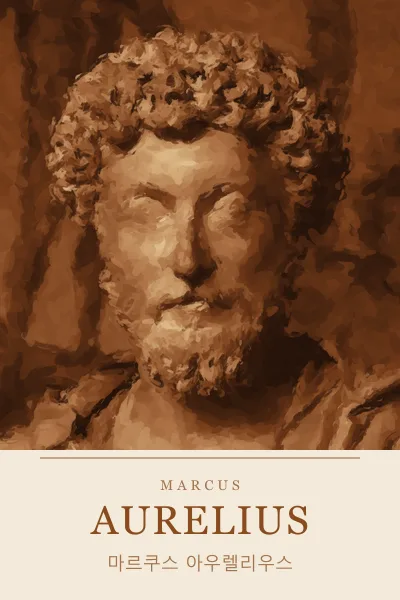
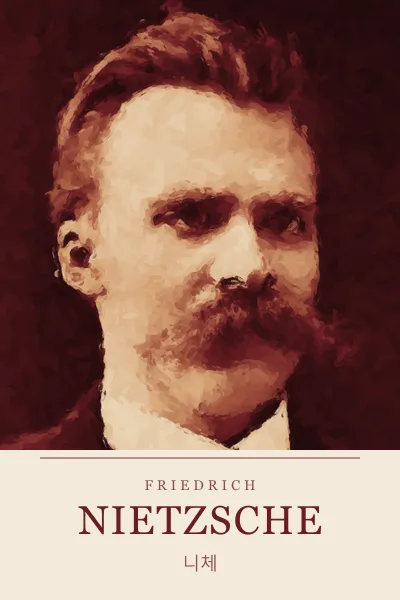
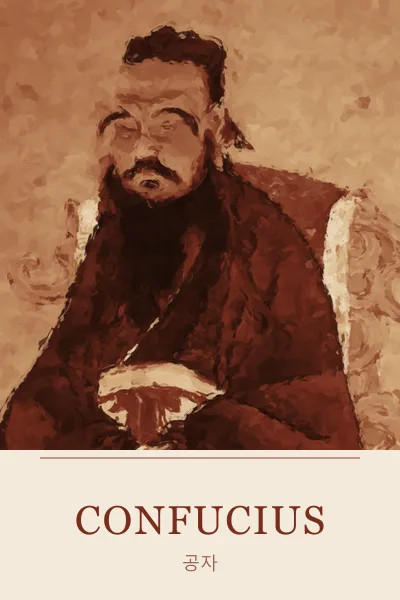
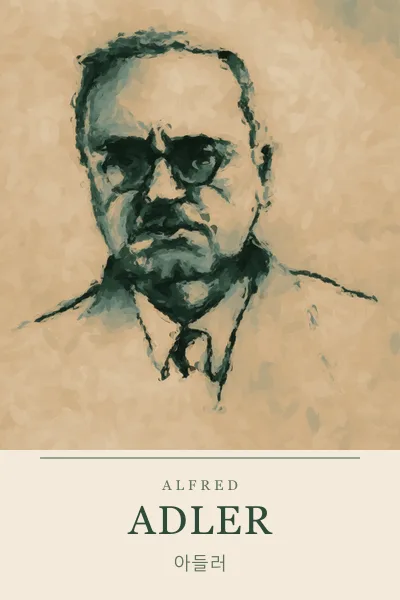
Plato, Aristotle, Confucius, Laozi, Rousseau, Nietzsche and more, plus Freud and Adler on the mind, in clear English: simpler sentences, the same ideas. Every part ends with a short “In plain words”.

Marcus Aurelius (마르쿠스 아우렐리우스)Friedrich Nietzsche (프리드리히 니체)Confucius (공자)Alfred Adler (알프레드 아들러)
Meet the thinkers →

Money classics

The classics of wealth, in their own words.

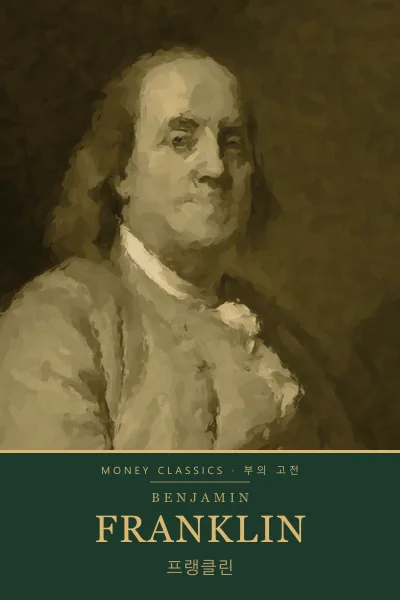
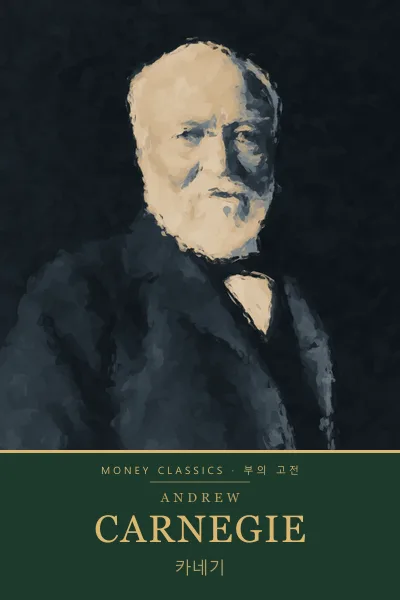
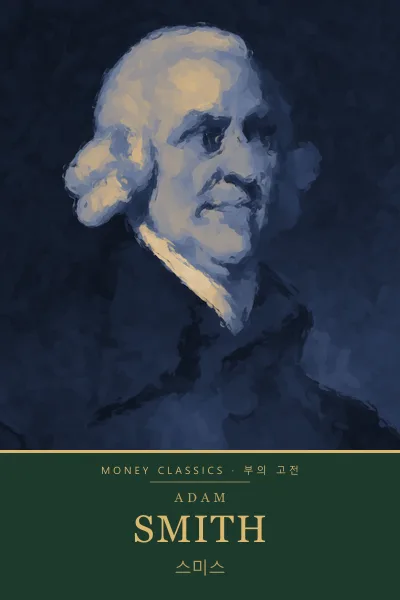
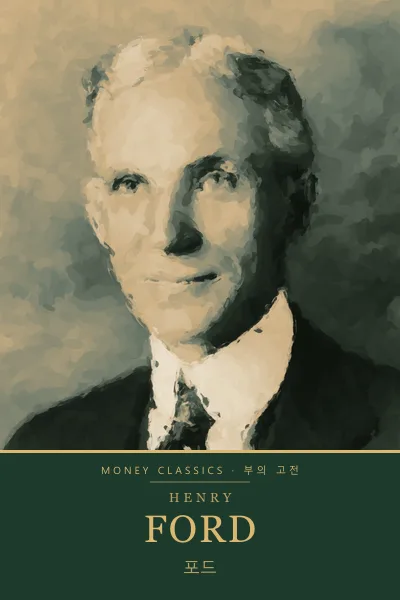
Adam Smith, Franklin, Carnegie, Henry Ford and more on earning, saving and giving. Every part ends with “What this means for your money”.

Benjamin Franklin (벤저민 프랭클린)Andrew Carnegie (앤드루 카네기)Adam Smith (애덤 스미스)Henry Ford (헨리 포드)
Meet the money masters →

Why SeoJae Story?

  • Made with Koreans in mind

    Natural Korean translations, not translationese, and help with what Koreans find hardest — a/the, tenses, Konglish. Learning Korean instead? Read real Korean classics and folktales.

    Mistakes Koreans make in English →
  • A method backed by research

    Research puts comfortable reading at 95–98% known words, so each level is written to keep you there. Audio lets you read and listen at once, and spaced repetition brings new words back before you forget them.

    How many words you need to read →
  • Classics worth finishing

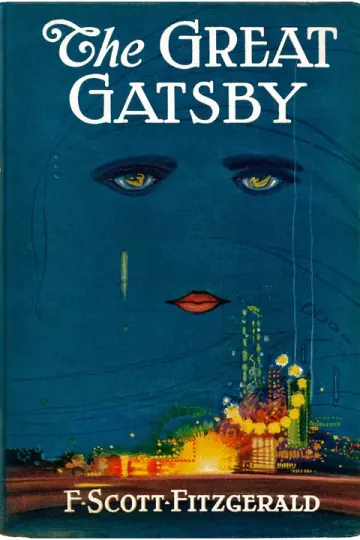
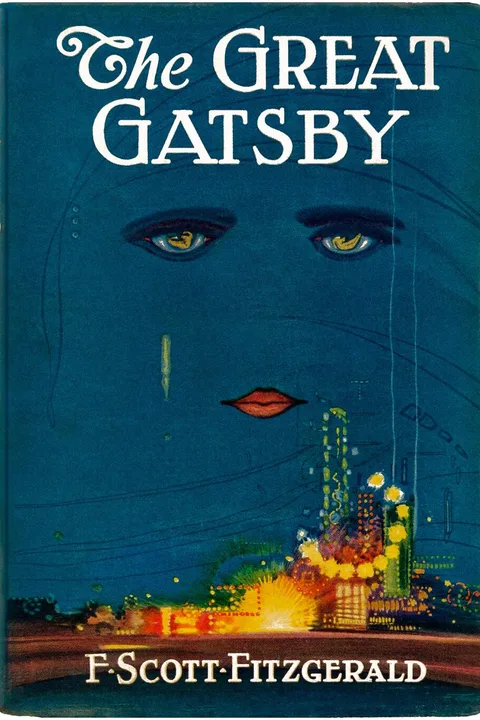
    Not textbook dialogues: Austen, Dickens, Fitzgerald and the great thinkers, retold from A1 so you can finish a real book — then open the author's original.

    How we make our stories →

Everything you need to actually learn

446
stories to read
A1–B2
graded levels (CEFR)
0.5–1.5×
narration speed
3
reading themes

Listen your way

Every sentence narrated by a natural voice. The line being read lights up and stays on screen, so you never lose your place. Slow it to 0.5× or pick a female or male narrator.

It was the night before Christmas, and the four March sisters sat around the fire.Their father was far away, helping the soldiers in the war, and money was short that year.“Christmas won’t be Christmas without any presents,” said Jo, lying on the rug.

Speed

  • Matched to your level

    Graded A1–B2, so it stretches you without losing you.

  • A dictionary on every word

    Tap any word for its meaning and real example sentences.

  • Vocabulary that sticks

    Save words and review them as flashcards.

  • Check that it landed

    A few questions after each story.

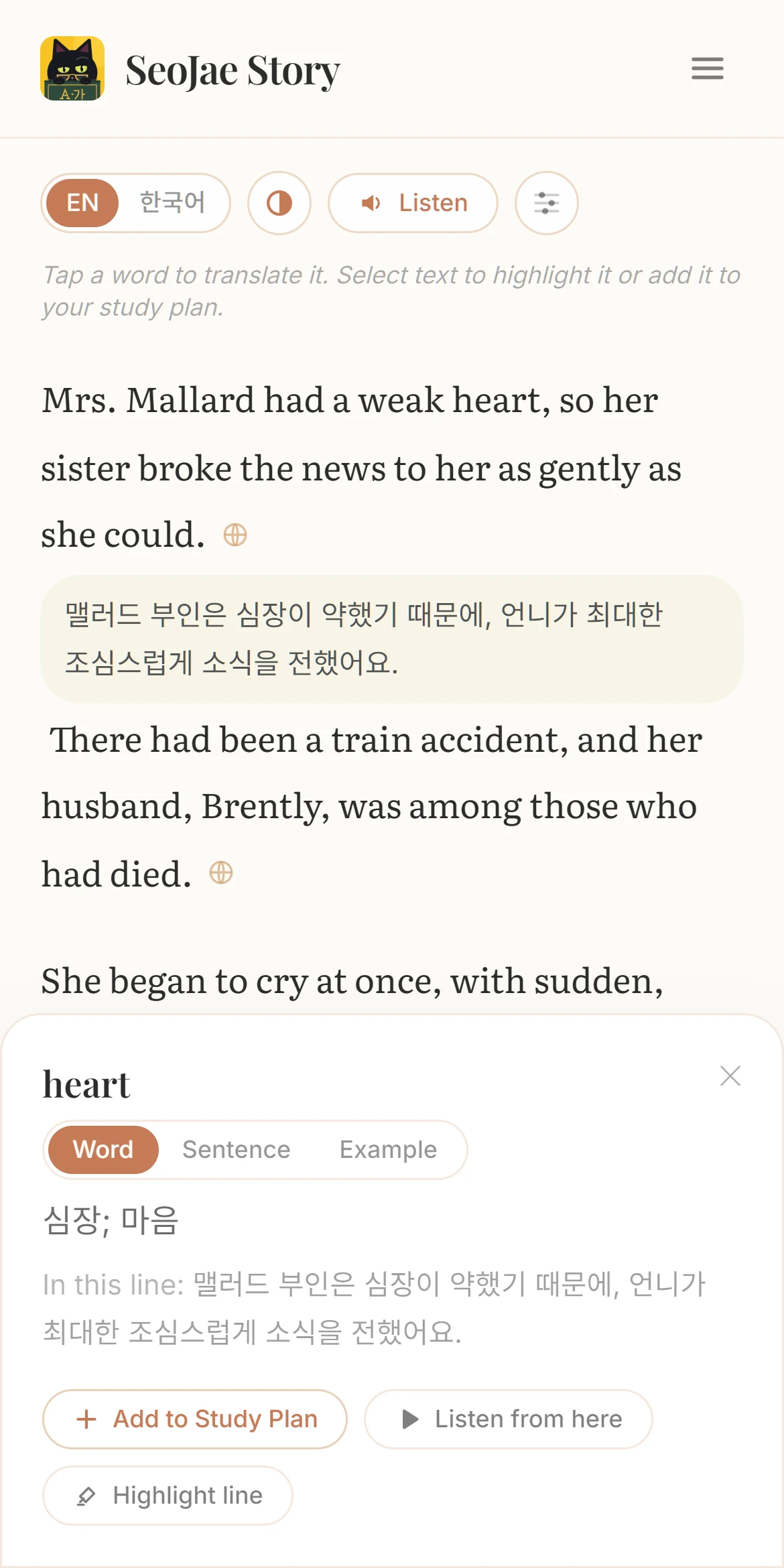
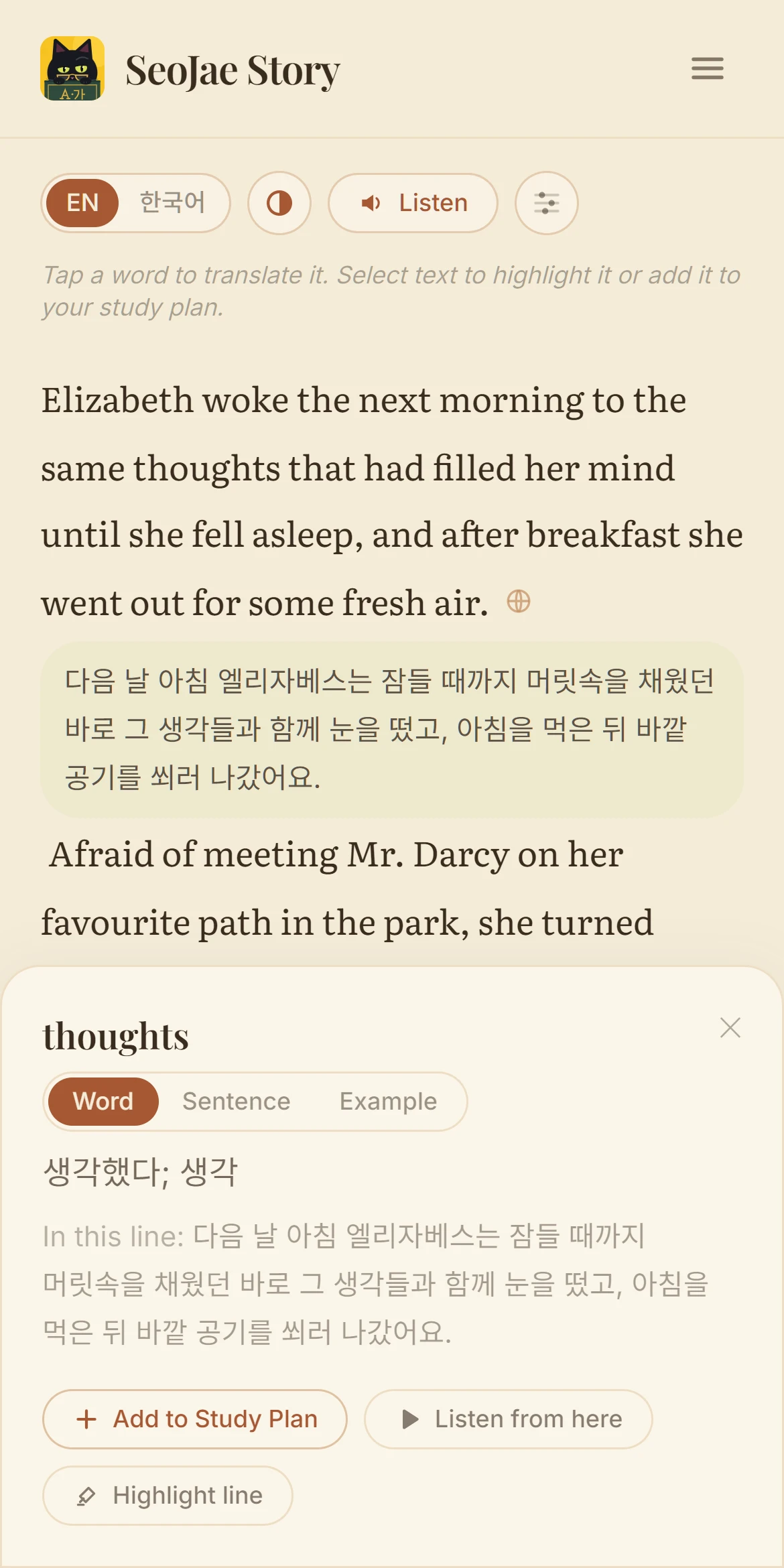
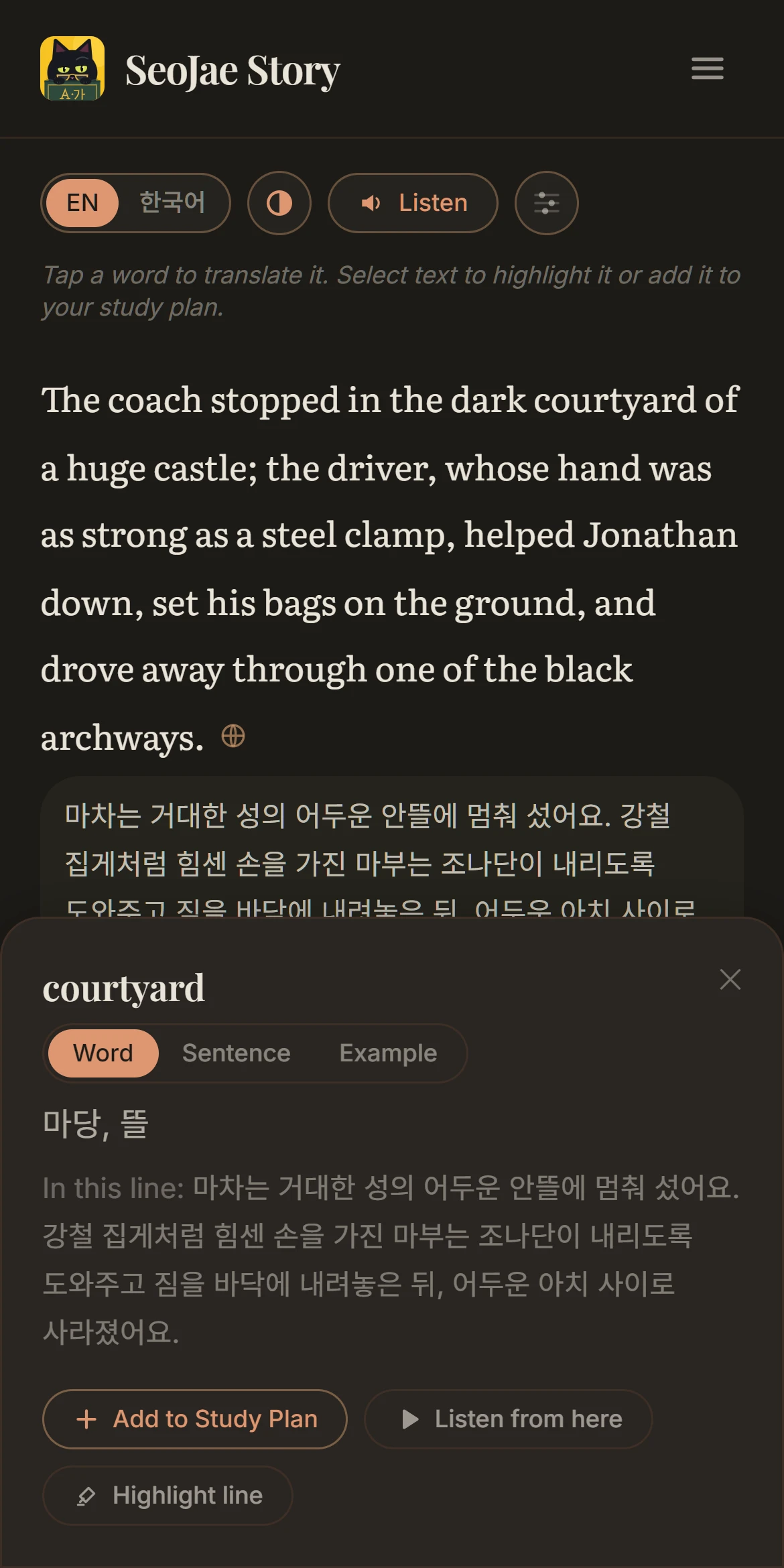
Read it your way: light, sepia or dark

Warm sepia for long afternoons, a true dark mode for late nights. Pick a look and the whole app follows. These are real screens from real stories.

Try it on this page

Light reading theme: an English story, The Story of an Hour, with the first sentence's Korean translation open and a tapped word showing its Korean meaning

Light

The classic cream page, crisp in daylight.

From The Story of an Hour →
Sepia reading theme: an English story, Pride and Prejudice: Darcy's Letter, with the first sentence's Korean translation open and a tapped word showing its Korean meaning

Sepia

Warm, paper-like tones that stay easy on the eyes for long reads.

From Pride and Prejudice: Darcy's Letter →
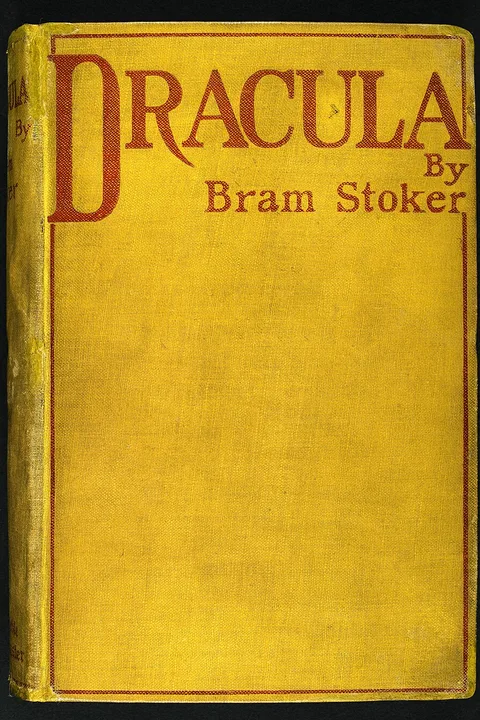
Dark reading theme: an English story, Dracula: The Castle, with the first sentence's Korean translation open and a tapped word showing its Korean meaning

Dark

A true dark page for reading in bed or on the night bus.

From Dracula: The Castle →

Or read the other way

Real Korean stories, not translations of Western ones.

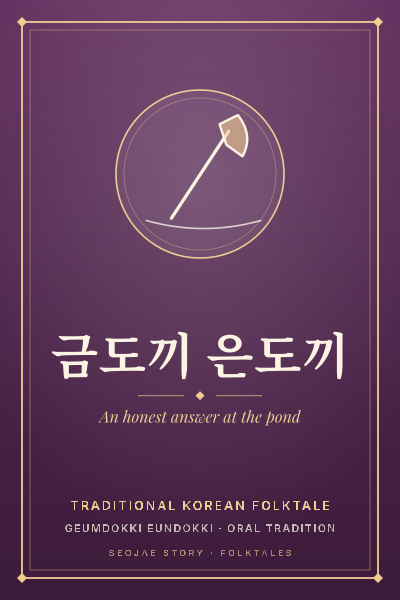
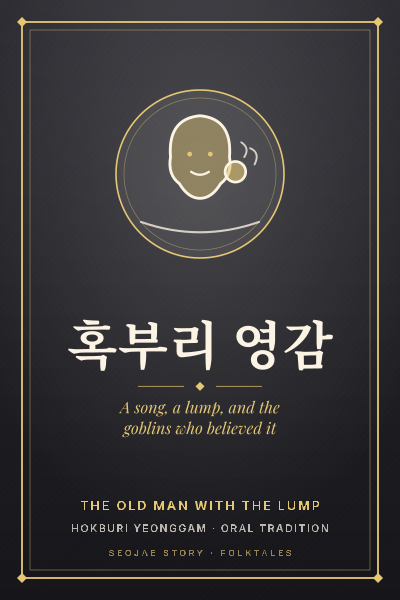
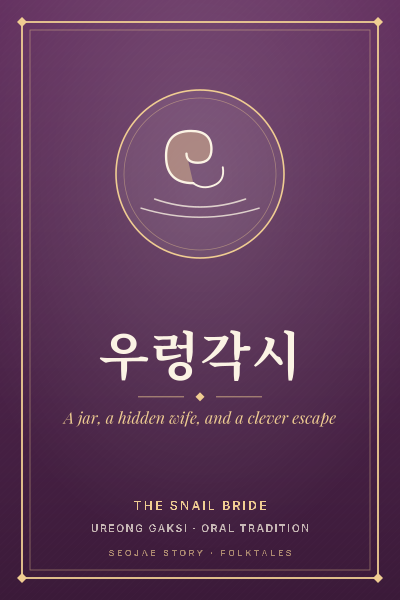
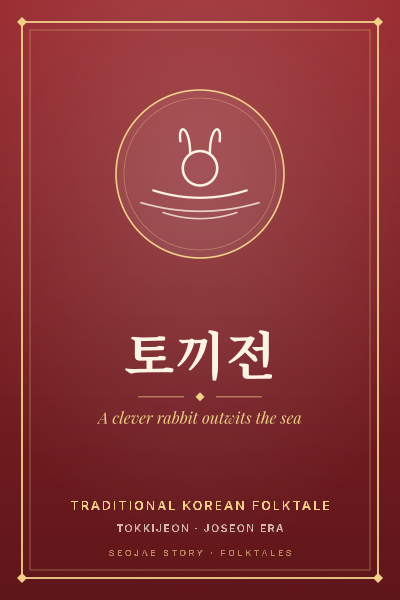
금도끼 은도끼 by Traditional Korean folktale (금도끼 은도끼, anonymous, oral tradition)의좋은 형제 by Traditional Korean folktale (의좋은 형제, anonymous, oral tradition)호랑이와 곶감 by Traditional Korean folktale (호랑이와 곶감, anonymous, oral tradition)도깨비 방망이 by Traditional Korean folktale (도깨비 방망이, anonymous, oral tradition)팥죽 할멈과 호랑이 by Traditional Korean folktale (팥죽 할멈과 호랑이, anonymous, oral tradition)은혜 갚은 까치 by Traditional Korean folktale (은혜 갚은 까치, anonymous, oral tradition)견우와 직녀 by Traditional Korean folktale (견우와 직녀, anonymous, oral tradition)젊어지는 샘물 by Traditional Korean folktale (젊어지는 샘물, anonymous, oral tradition)흥부와 놀부 by Traditional Korean folktale (Heungbu-jeon, anonymous, late Joseon era)A Bridegroom for Miss Mole by William Elliot Griffis, after traditional Korean folklore (1843–1928)The Unmannerly Tiger by William Elliot Griffis, after traditional Korean folklore (1843–1928)Tokgabi and the Kind Maid by William Elliot Griffis, after traditional Korean folklore (1843–1928)The Sneezing Colossus by William Elliot Griffis, after traditional Korean folklore (1843–1928)Cat-kin and the Queen Mother by William Elliot Griffis, after traditional Korean folklore (1843–1928)Prince Sandalwood, the Father of Korea by William Elliot Griffis, after traditional Korean mythology (1843–1928)The Rabbit's Eyes by William Elliot Griffis, after traditional Korean folklore (1843–1928)East Light and the Bridge of Fishes by William Elliot Griffis, after traditional Korean mythology (1843–1928)Topknots and Crockery Hats by William Elliot Griffis, after traditional Korean legend (1843–1928)Fancha and the Magpie by William Elliot Griffis, after traditional Manchu-Korean legend (1843–1928)Old White Whiskers and Mr. Bunny by William Elliot Griffis, after traditional Korean folklore (1843–1928)The King of the Flowers by William Elliot Griffis, after traditional Korean folklore (1843–1928)Why Cats and Dogs Don't Get Along by William Elliot Griffis, after traditional Korean folklore (1843–1928)콩쥐와 팥쥐 by Traditional Korean folktale (Kongjwi Patjwi-jeon, anonymous, Joseon era)선녀와 나무꾼 by Traditional Korean folktale (선녀와 나무꾼, anonymous, oral tradition)해와 달이 된 오누이 by Traditional Korean folktale (해와 달이 된 오누이, anonymous, oral tradition)혹부리 영감 by Traditional Korean folktale (Hokburi Yeonggam, oral tradition, anonymous)우렁각시 by Traditional Korean folktale (Ureong Gaksi, oral tradition, anonymous)토끼전 by Traditional Korean folktale (Tokkijeon, also called Byeoljubu-jeon, anonymous, Joseon era)
See all 28 folktales →
Up to 10 readers

Read it together

Start a book club of up to 10 readers. Share a chapter and everyone in your club can open it — free, while your membership is active — then talk it over.

My book club

Your first story is waiting.

Open the library

Starts at beginner (A1) · No sign-up · Works offline

GET IT ONGoogle Play