
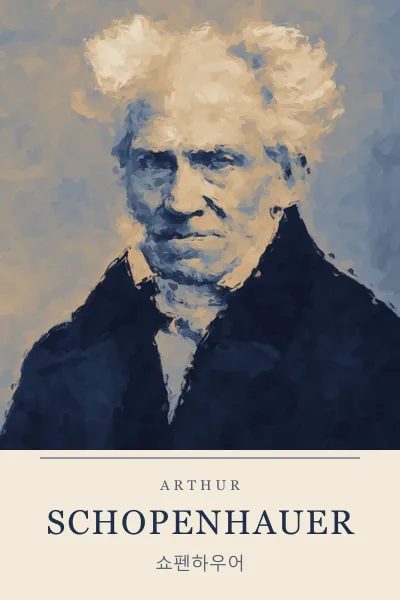
The Wisdom of Life: What a Man Is
삶의 지혜: 사람이 무엇인가
Arthur Schopenhauer (1788–1860)
이야기
단어를 탭하면 번역돼요. 문장을 선택하면 형광펜을 칠하거나 학습 계획에 추가할 수 있어요.
Arthur Schopenhauer was famous as the great pessimist of philosophy: he believed that life is mostly suffering.Yet late in life he wrote a practical guide to living as happily as possible, and it became his most popular book.
“The differences in human fortune can be reduced to three classes.First, what a man is: his personality in the widest sense, including health, strength, beauty, temperament, moral character, intelligence and education.Second, what a man has: property and possessions of every kind.Third, how a man stands in the eyes of others: his honour, his rank and his reputation.The first class matters far more than the other two, because nature herself made these differences, while the others are only human arrangements.Compared with real personal advantages, such as a great mind or a great heart, all the privileges of rank or birth are like kings on the stage compared with kings in real life.
The world in which a man lives is shaped mainly by the way he looks at it, so it is different for different people: to one it is empty and dull, to another rich, interesting and full of meaning.Every man is shut up inside his own consciousness, and he can no more get out of it than he can get out of his own skin.All the pride and pleasure in the world, seen by the dull mind of a fool, are poor indeed compared with the imagination of Cervantes writing Don Quixote in a miserable prison.
Health outweighs all other blessings so much that one may really say that a healthy beggar is happier than a sick king.In general, nine-tenths of our happiness depends on health alone. With health, everything is a source of pleasure; without it, nothing can be enjoyed.It follows that the greatest of follies is to sacrifice health for any other kind of happiness: for money, for promotion, for learning or for fame.What a man is in himself, what goes with him when he is alone, what no one can give him or take away, is plainly more important than anything he owns, or whatever he may be in the eyes of the world.”
전체 번역먼저 이야기를 읽어 보고, 이해했는지 확인할 때만 열어 보세요.
아르투어 쇼펜하우어는 철학의 대표적인 비관주의자로 유명했어요. 삶은 대부분 고통이라고 믿었거든요. 그런데 말년에 할 수 있는 한 행복하게 사는 법을 다룬 실용적인 안내서를 썼고, 이 책은 쇼펜하우어의 가장 인기 있는 책이 되었어요.
"사람의 운명이 서로 다른 까닭은 세 가지로 나눌 수 있다. 첫째, 사람이 무엇인가. 곧 가장 넓은 의미의 인격으로, 건강, 힘, 아름다움, 기질, 도덕적 성품, 지성, 교양이 여기에 들어간다. 둘째, 사람이 무엇을 가졌는가. 곧 온갖 종류의 재산과 소유물이다. 셋째, 사람이 남들의 눈에 어떻게 비치는가. 곧 명예와 지위와 평판이다. 첫째가 나머지 둘보다 훨씬 중요하다. 첫째의 차이는 자연이 직접 만든 것이지만, 나머지는 사람들이 정해 놓은 제도일 뿐이기 때문이다. 위대한 정신이나 위대한 마음 같은 진짜 개인적 장점에 비하면, 지위나 출신이 주는 온갖 특권은 실제 왕에 비한 무대 위의 왕과 같다.
사람이 사는 세계는 주로 그 사람이 세계를 바라보는 방식에 따라 모양이 정해진다. 그래서 세계는 사람마다 다르다. 어떤 이에게는 텅 비고 따분하며, 또 어떤 이에게는 풍요롭고 흥미롭고 의미로 가득하다. 모든 사람은 자기 의식 안에 갇혀 있으며, 자기 피부 밖으로 나갈 수 없는 것처럼 그 의식 밖으로도 나갈 수 없다. 세상의 온갖 자랑과 즐거움도 어리석은 사람의 둔한 마음에 비치면, 비참한 감옥에서 《돈키호테》를 쓰던 세르반테스의 상상력에 비해 참으로 초라하다.
건강은 다른 모든 축복보다 훨씬 무거워서, 건강한 거지가 병든 왕보다 행복하다고 정말로 말할 수 있을 정도다. 대체로 우리 행복의 십 분의 구는 오직 건강에 달려 있다. 건강하면 모든 것이 즐거움의 원천이 되지만, 건강하지 않으면 아무것도 즐길 수 없다. 그러므로 가장 어리석은 짓은 다른 어떤 행복을 위해 건강을 희생하는 것이다. 돈을 위해서든, 승진을 위해서든, 학문을 위해서든, 명성을 위해서든 말이다. 사람이 그 자체로 무엇인가, 혼자 있을 때 곁에 있는 것, 아무도 주거나 빼앗을 수 없는 것이, 가진 어떤 재산이나 세상의 눈에 비친 어떤 모습보다 분명히 더 중요하다."
쉽게 말하면
쇼펜하우어는 우리를 행복하게 하는 것을 세 묶음으로 나눠요. 우리가 어떤 사람인지, 무엇을 가졌는지, 남들이 우리를 어떻게 생각하는지예요. 첫 번째 묶음이 거의 모든 것을 결정한다고 주장해요. 우리는 언제나 자기 마음을 통해서만 세상을 겪기 때문이에요. 같은 일이 어떤 사람에게는 지루하고 다른 사람에게는 멋질 수 있어요. 그러니 풍요로운 내면은 바깥에서 오는 어떤 행운보다 값져요. 무엇보다 건강이 먼저예요. 건강이 없으면 다른 어떤 것도 즐길 수 없으니, 건강을 돈이나 성공과 맞바꾸는 것은 손해 보는 거래예요.
원문
이제 원문으로 읽어 보세요
방금 읽은 건 쉽게 다시 쓴 이야기예요. 이번엔 작가가 쓴 그대로의 원문을 줄이지 않고, 짧게 나눠서 읽어 보세요.
Chapters I–II · 11,752 단어 · 26 개의 짧은 읽기
원문 읽기이해도 확인
1. What are Schopenhauer's three classes of human fortune?
2. Why does the first class matter most?
3. What does the comparison with "kings on the stage" mean?
4. Why does Schopenhauer mention Cervantes?
5. What does he call "the greatest of follies"?
핵심 단어
noun
pessimist
비관주의자
A pessimist expects the worst from every situation.
비관주의자는 어떤 상황에서든 최악을 예상해요.
한줄 요약
In 1–2 sentences, name Schopenhauer's three sources of happiness, and say which one he thinks matters most and why.
출처: Adapted from Chapters I and II of Arthur Schopenhauer's "The Wisdom of Life" (from "Parerga and Paralipomena", 1851), in T. Bailey Saunders's English translation (long in the public domain, Project Gutenberg #10741). This simplified version, the explainer and the Korean translation are original text written for SeoJae Story.
이 책의 이야기
책 소개 →The Wisdom of Life · 3편 중 0편 읽음
다음 이야기 · 3편 중 2편
What a Man Has, and What He Seems
가진 것과 남에게 보이는 것 · 3 분 소요
다음 편 읽기북클럽과 함께 읽기
이 챕터를 북클럽과 공유하고 함께 이야기 나눠요.