
An Essay on the Principle of Population: Two Postulates
인구론: 두 가지 전제
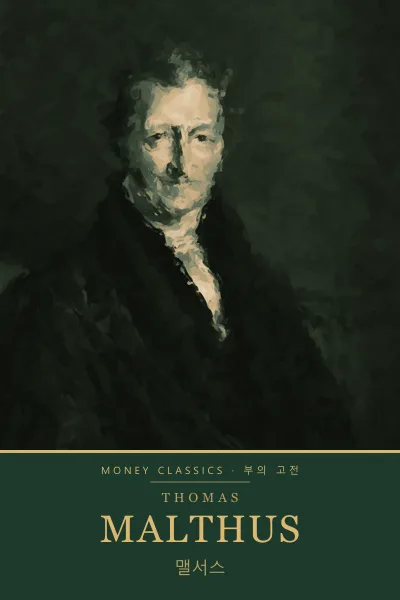
Thomas Malthus (1766–1834)
이야기
단어를 탭하면 번역돼요. 문장을 선택하면 형광펜을 칠하거나 학습 계획에 추가할 수 있어요.
Thomas Malthus was an English clergyman who, in 1798, published an essay that made him the most argued-about economist of his age.Clever writers of his time believed that, after the French Revolution, humanity would soon reach a perfect society with no poverty.
“I have read these hopeful writers with great pleasure, and I wish their dream could come true.But I see great difficulties in the way, and nothing would please me more than to see them removed.A writer may tell me that he thinks man will one day become an ostrich.Before I believe him, he ought to show that our necks are growing longer and our hair is turning into feathers.
I think I may fairly make two postulates.First, that food is necessary to human life.Second, that the passion between the sexes is necessary, and will remain nearly as it is now.
Population, when unchecked, increases in a geometrical ratio, but food increases only in an arithmetical ratio.A slight knowledge of numbers will show how much greater the first power is than the second.”
From these two simple ideas, Malthus drew a gloomy conclusion: poverty can never be fully removed.
전체 번역먼저 이야기를 읽어 보고, 이해했는지 확인할 때만 열어 보세요.
토머스 맬서스는 영국의 성직자로, 1798년 한 편의 논문을 펴내 그 시대에 가장 논쟁적인 경제학자가 되었어요. 당시의 영리한 작가들은 프랑스 혁명 이후 인류가 곧 가난이 없는 완벽한 사회에 이를 것이라고 믿었어요.
"저는 희망에 찬 이 작가들의 글을 즐겁게 읽었고, 그 꿈이 이루어지기를 바랍니다. 하지만 그 길에는 큰 어려움이 보이며, 그 어려움이 사라지는 것을 보는 것보다 더 기쁜 일은 없을 것입니다. 어떤 작가가 언젠가 사람이 타조가 될 것이라고 말할 수도 있습니다. 그 말을 믿기 전에, 그 작가는 우리 목이 점점 길어지고 머리카락이 깃털로 변하고 있다는 것을 보여 주어야 합니다.
저는 두 가지 전제를 세워도 괜찮다고 생각합니다. 첫째, 음식은 사람이 사는 데 꼭 필요합니다. 둘째, 남녀 사이의 정념은 꼭 필요하며, 지금과 거의 같은 상태로 남을 것입니다.
인구는 억제되지 않으면 기하급수적으로 늘어나지만, 식량은 산술급수적으로만 늘어납니다. 숫자를 조금만 알아도 앞의 힘이 뒤의 힘보다 얼마나 큰지 알 수 있습니다."
이 두 가지 단순한 생각에서 맬서스는 우울한 결론을 끌어냈어요. 가난은 결코 완전히 없앨 수 없다는 것이에요.
내 돈에 적용하면
기하급수는 1, 2, 4, 8, 16처럼 두 배씩 늘어나고, 산술급수는 1, 2, 3, 4, 5처럼 매번 같은 양만큼 늘어나요. 복리와 똑같은 수학이에요. 비율로 늘어나는 것은 언젠가 일정한 양씩 늘어나는 것을 한참 앞지르게 돼요. 맬서스의 타조 농담은 지금도 좋은 조언이에요. 대담한 예측을 믿기 전에, 그 일이 이미 일어나고 있다는 증거를 요구하세요. 맬서스의 우울한 결론은 결국 틀린 것으로 드러났는데, 그 이야기는 다음 편에서 이어져요.
원문
이제 원문으로 읽어 보세요
방금 읽은 건 쉽게 다시 쓴 이야기예요. 이번엔 작가가 쓴 그대로의 원문을 줄이지 않고, 짧게 나눠서 읽어 보세요.
Chapter 1 · 2,181 단어 · 5 개의 짧은 읽기
원문 읽기이해도 확인
1. What did clever writers of Malthus's time believe?
2. Why does Malthus mention an ostrich?
3. What is Malthus's first postulate?
4. How does food increase, according to Malthus?
5. What conclusion did Malthus draw?
핵심 단어
noun
clergyman
성직자, 목사
The clergyman gave a short sermon.
목사님이 짧은 설교를 했어요.
한줄 요약
In 1–2 sentences, explain Malthus's two postulates and the conclusion he drew from them.
출처: Adapted from chapter 1 of Thomas Malthus's "An Essay on the Principle of Population" (first edition, 1798), written in English and long in the public domain (Project Gutenberg #4239). This simplified version, the explainer and the Korean translation are original text written for SeoJae Story.
이 책의 이야기
책 소개 →An Essay on the Principle of Population · 3편 중 0편 읽음
다음 이야기 · 3편 중 2편
Doubling Every Twenty-Five Years
25년마다 두 배 · 2 분 소요
다음 편 읽기북클럽과 함께 읽기
이 챕터를 북클럽과 공유하고 함께 이야기 나눠요.