
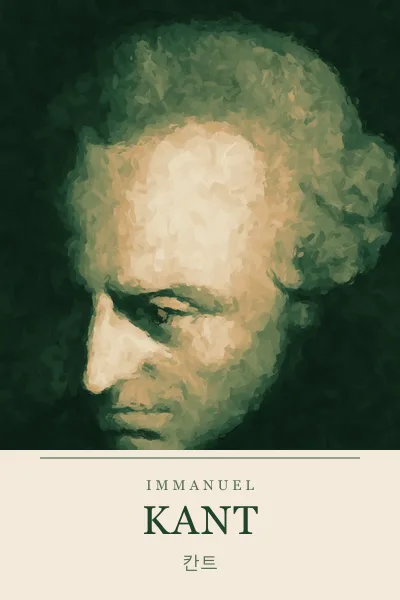
Groundwork of the Metaphysics of Morals: Humanity as an End
도덕형이상학 정초: 목적으로서의 인간
Immanuel Kant (1724–1804)
이야기
단어를 탭하면 번역돼요. 문장을 선택하면 형광펜을 칠하거나 학습 계획에 추가할 수 있어요.
“Things that we want only because they are useful to us have a value that depends on our wishes; if we stopped wanting them, they would be worth nothing.Such things are called things. But rational beings are called persons, because their very nature marks them out as ends in themselves, as something that must not be used merely as a means.Rational nature exists as an end in itself. Every human being thinks of his own existence in this way, and every other rational being does the same, on the same grounds.
So the practical imperative will be this: Act so that you treat humanity, whether in your own person or in that of any other, always at the same time as an end, and never merely as a means.Take again the man who makes a lying promise to others. He sees at once that he wants to use another person merely as a means, as a tool for his own purpose.For the person he deceives cannot possibly agree to being treated in this way, and so cannot share the purpose of the action.
Now imagine a world in which every rational being is both a lawmaker and a member, bound only by the laws that it gives itself. This is the kingdom of ends.In the kingdom of ends everything has either a price or a dignity.Whatever has a price can be replaced by something else of equal value; whatever, on the other hand, is above all price, and therefore has no equivalent, has a dignity.Skill and hard work have a market price; wit and imagination have a fancy price; but faithfulness to promises and kindness from principle have an inner worth, that is, dignity.
Morality is the only condition under which a rational being can be an end in itself, because only through it can he be a lawmaking member of the kingdom of ends.So morality, and humanity as far as it is capable of morality, is the only thing that has dignity.The dignity of a rational being lies in this: it obeys no law except the one that it also gives to itself. This is the autonomy of the will.”
전체 번역먼저 이야기를 읽어 보고, 이해했는지 확인할 때만 열어 보세요.
"우리에게 쓸모 있어서 원하는 것들은 우리의 바람에 달린 가치를 지닌다. 우리가 그것을 더는 원하지 않으면 아무 가치도 없어질 것이다. 그런 것들을 사물이라 부른다. 그러나 이성적 존재는 인격이라 부른다. 그 본성 자체가 이성적 존재를 목적 그 자체로, 곧 한낱 수단으로 쓰여서는 안 되는 무엇으로 드러내기 때문이다. 이성적 본성은 목적 그 자체로 존재한다. 모든 인간은 자기 존재를 이렇게 생각하며, 다른 모든 이성적 존재도 같은 근거에서 똑같이 생각한다.
그러므로 실천적 명령은 이렇게 될 것이다. 너 자신의 인격에서든 다른 모든 사람의 인격에서든, 인간을 언제나 동시에 목적으로 대하고 결코 한낱 수단으로만 대하지 않도록 행동하라. 남에게 거짓 약속을 하는 사람을 다시 생각해 보자. 이 사람은 자기가 다른 사람을 한낱 수단으로, 자기 목적을 위한 도구로 쓰려 한다는 것을 곧바로 알게 된다. 속는 사람은 이렇게 대우받는 데 결코 동의할 수 없고, 그러니 그 행동의 목적을 함께 가질 수도 없기 때문이다.
이제 모든 이성적 존재가 법을 만드는 자이자 그 구성원이며, 오직 스스로에게 부여한 법에만 묶이는 세계를 상상해 보자. 이것이 목적의 왕국이다. 목적의 왕국에서 모든 것은 가격을 지니거나 존엄성을 지닌다. 가격을 지닌 것은 같은 값어치의 다른 것으로 바꿀 수 있다. 반면 모든 가격을 넘어서서 어떤 것과도 맞바꿀 수 없는 것은 존엄성을 지닌다. 솜씨와 근면은 시장 가격을 지니고, 재치와 상상력은 애호 가격을 지닌다. 그러나 약속을 지키는 신의와 원칙에서 나온 친절은 내적 가치, 곧 존엄성을 지닌다.
도덕은 이성적 존재가 목적 그 자체일 수 있는 유일한 조건이다. 오직 도덕을 통해서만 목적의 왕국에서 법을 만드는 구성원이 될 수 있기 때문이다. 그러므로 도덕, 그리고 도덕을 행할 수 있는 한에서의 인간만이 존엄성을 지닌 유일한 것이다. 이성적 존재의 존엄성은 이 점에 있다. 자기 스스로에게도 부여하는 법 말고는 어떤 법에도 복종하지 않는다는 것. 이것이 의지의 자율이다."
쉽게 말하면
이것은 같은 도덕 법칙을 다른 방식으로 말한 거예요. 사람은 누구나 그 자체로 소중하니, 결코 사람을 도구로만 이용하지 말라는 거예요. 우리는 늘 서로를 수단으로 이용해요. 기사가 우리를 집에 데려다주거나 요리사가 밥을 만들어 줄 때처럼요. 그래도 상대를 존중하고 상대가 동의할 수 있다면 괜찮아요. 거짓말과 속임수가 잘못인 것은 상대가 결코 동의할 수 없기 때문이에요. 그것은 생각하는 존재를 물건처럼 다루는 일이에요. 물건은 가격이 있어서 맞바꿀 수 있지만, 사람은 존엄성이 있어서 대신할 수 없어요. 이 생각은 오늘날 인권 개념의 바탕이 되었어요.
원문
이제 원문으로 읽어 보세요
방금 읽은 건 쉽게 다시 쓴 이야기예요. 이번엔 작가가 쓴 그대로의 원문을 줄이지 않고, 짧게 나눠서 읽어 보세요.
Second Section · 15,927 단어 · 35 개의 짧은 읽기
원문 읽기이해도 확인
1. Why are rational beings called "persons" rather than "things"?
2. What does this form of the imperative tell us?
3. Why is a lying promise wrong according to this formula?
4. What is the difference between a price and a dignity?
5. What is the "autonomy of the will"?
핵심 단어
noun
means
수단, 방법
For him, money is only a means to travel the world.
그 청년에게 돈은 세계를 여행하기 위한 수단일 뿐이에요.
한줄 요약
In 1–2 sentences, explain what it means to treat a person "merely as a means", and the difference between a price and dignity.
출처: Adapted from the Second Section of Immanuel Kant's "Groundwork of the Metaphysics of Morals" (1785), in Thomas Kingsmill Abbott's English translation, published as "Fundamental Principles of the Metaphysic of Morals" (long in the public domain, Project Gutenberg #5682). This simplified version, the explainer and the Korean translation are original text written for SeoJae Story.
이 책의 이야기
책 소개 →Groundwork of the Metaphysics of Morals · 3편 중 0편 읽음
지금까지 준비된 이야기를 모두 읽었어요. 새로운 챕터가 곧 추가돼요.
북클럽과 함께 읽기
이 챕터를 북클럽과 공유하고 함께 이야기 나눠요.